Forklift Light OEM and ODM: Custom Safety Lighting for Fleet Brands
The rental brand’s marketing manager has a problem the product team created years ago: the trucks carry the company’s livery, the contracts carry the company’s name, and the safety lights bolted onto every machine carry somebody else’s logo. Every time a customer films a walkthrough of a rented warehouse, the brand on the lights is the supplier’s. A forklift light OEM and ODM program fixes that — and, done properly, simplifies spares, standardizes specifications and turns a consumable purchase into brand equity at the same time.
This article explains how a forklift light OEM and ODM program actually runs: where OEM ends and ODM begins, which components can realistically be customized, what the process looks like from specification to mass production, and how quality assurance and certification carry over to custom runs.
Key Takeaways
- OEM puts your brand on a proven design; ODM adapts the design itself. Rental brands usually start OEM for speed, then move selected SKUs to ODM once volume justifies engineering changes.
- Four customization levers matter in this category: logo, beam pattern, projection pattern and housing mold. XRLL supports all four in-house, including its own tooling for custom housings.
- The process is sample-first by design: you provide specifications or a sample, receive a quotation within 24 Std., approve pre-production samples and testing, and only then does mass production start.
- Custom runs ride the same quality gates as the factory brand. Nine inspection gates, OSRAM and Cree chip verification and certification files apply to OEM units on the same lines — branding changes, the process does not.
- Phase the program. Logo programs launch fastest; projection patterns and housing molds follow where volume and differentiation justify them.
OEM and ODM: Two Models, Two Commitments
Search for a forklift light OEM ODM supplier and you will find the two acronyms used interchangeably — in trade-show conversations, on supplier sites, in RFQ templates — and the confusion costs buyers real money, so it is worth drawing the line cleanly. In an OEM arrangement, the manufacturer supplies an existing, proven design and builds it under the buyer’s brand — the buyer chooses from the catalog, applies custom branding and receives a product whose engineering history already exists. In an ODM arrangement, the manufacturer’s engineering team develops or adapts the design itself: different optics, a modified housing, a projection pattern drawn for the buyer’s specific machines.
Neither is better; they answer different briefs. A rental company standardizing 400 forklifts on blue spot and red zone lights wants speed and proven reliability — OEM delivers that, with the buyer’s logo on a housing that has already survived years in the field. A logistics brand whose trucks work in a distinctive layout — narrow cold aisles, unusually tall racking, mixed crane traffic — has an application problem the catalog answers imperfectly, and that is where ODM engineering earns its cost. The failure mode is choosing ODM when the brief is actually OEM: paying engineering fees to reinvent a beam pattern that already exists.
| Dimension | OEM (Private Label) | ODM (Custom Engineering) |
|---|---|---|
| Design source | Existing catalog platform, rebranded | Adapted or newly engineered for the buyer |
| Typical customization | Logo, packaging, connector or cable length by agreement | Beam pattern, projection pattern, housing mold, optics |
| Time to launch | Fastest — proven platform, sample confirmation then production | Longer — engineering, samples and validation before bulk |
| Upfront investment | Lowest | Higher where tooling (molds) is involved |
| Best fit | Standardizing mixed fleets under one brand quickly | Applications the catalog does not cover precisely |
Volumes, tooling investment and lead times are quoted per program — they depend on the customization level and the specification, and any supplier who quotes them before understanding the brief is estimating, not quoting.
What Can Actually Be Customized on a Forklift Safety Light
Customization claims should be checked against the factory floor, because each lever has real engineering behind it.
Logo and branding. The simplest program: the buyer’s mark applied to housings and packaging of an existing model. The engineering risk is near zero; the diligence point is printing durability — logos on forklift lights live outdoors, get pressure-washed and vibrate for years, so the marking process matters as much as the artwork.
Beam pattern. The lens and reflector geometry that shapes where light lands. A rental fleet serving food-grade cold stores may want a tighter, lower-glare pattern for aisle work; a port-equipment fleet wants throw. Beam changes are optical engineering — they need photometric validation, not just a new lens snapped into an old housing.
Projection pattern. The signature of the warning category: the shape projected onto the floor. Blue arrows, red halos and laser lines all exist as standard; a brand can commission a distinct pattern — a company-shaped zone marker, a specific line geometry for AGV paths — that becomes recognizably theirs. XRLL’s laser projection line, developed for forklifts, cranes and AGVs, is the platform for this kind of customization, with IEC 60825 laser-safety compliance as the governing constraint.
Housing mold. The deepest level: a bespoke housing, tooled and owned for the program. XRLL makes its own tooling for custom housings, which changes the economics and the conversation — mold iterations happen in-house, and the buyer is negotiating with the party that cuts the steel. This is also the lever with real upfront investment, so it belongs last in a phased program, justified by volume.
The Customization Process, Step by Step
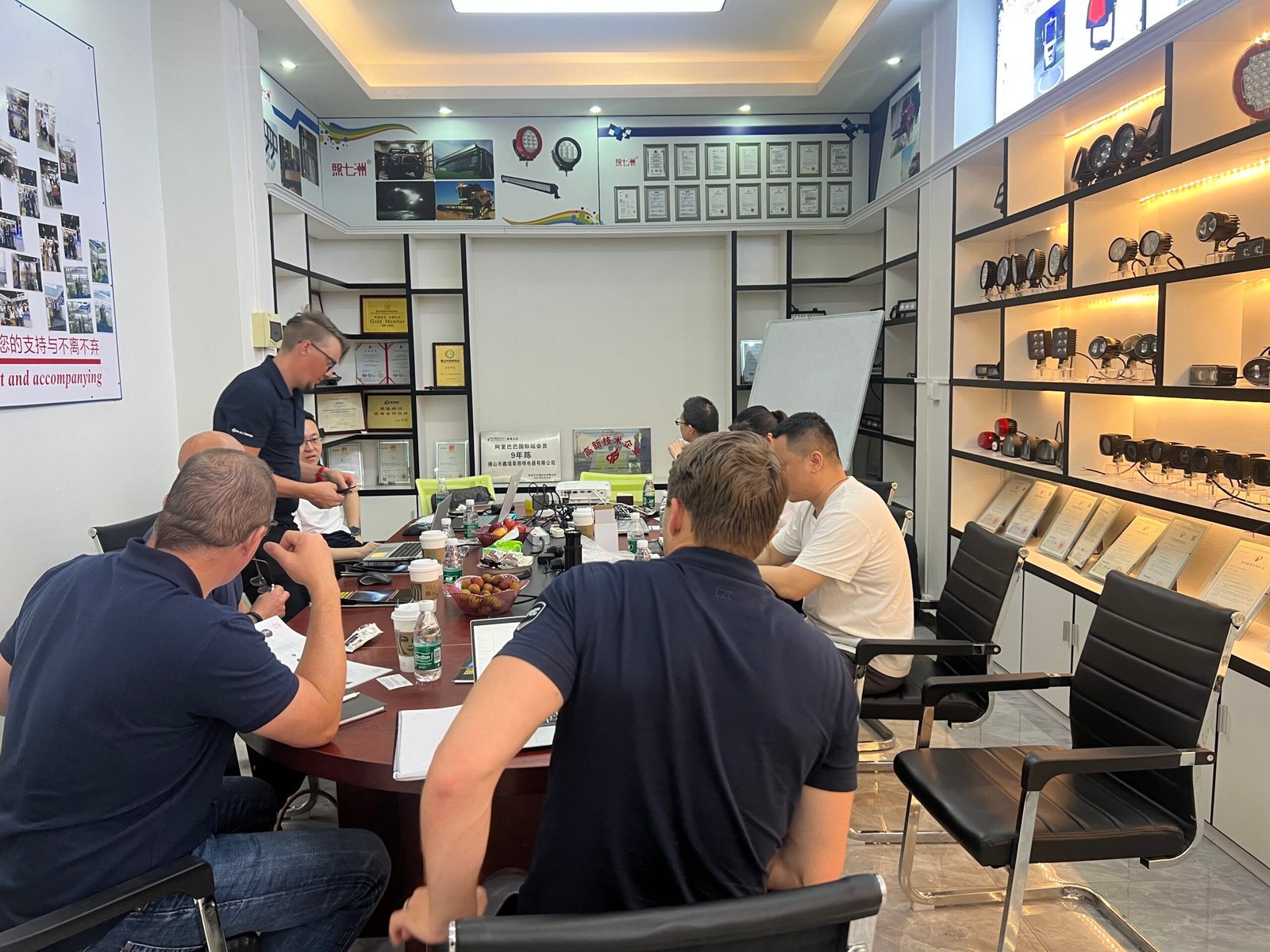
A well-run custom program follows a shape that any buyer can hold a supplier to. XRLL’s stated flow: the customer provides specifications or a sample; the quotation comes back within 24 Std.; pre-production samples are confirmed and tested before mass production begins.
Each step exists to retire a specific risk. The specification-or-sample step removes ambiguity — a physical sample of the light you are replacing communicates mounting, voltage group and beam expectations faster than any drawing. The 24-hour quotation tests the supplier’s engineering engagement: a serious factory responds with model recommendations and open questions, not just a price. Sample confirmation retires the biggest risk in the whole program — does the product actually perform in your trucks, in your aisles, in your light conditions — while the cost of being wrong is still samples, not containers. Written confirmation of rated input for your voltage groups belongs in this stage. Only then does mass production start, against a frozen specification.
Buyers evaluating suppliers should treat deviations from this shape as information. A supplier who skips the sample stage, or who starts production before the buyer has tested, is optimizing their cash flow at the buyer’s risk.
Where Custom Programs Pay Back for Rental and Logistics Brands
The brand argument is the visible one: Maschinen, sites and customer walkthroughs all carry the fleet’s own mark, and the safety light — the most photographed component on a modern forklift, thanks to its glowing projections — stops advertising a competitor. For rental brands competing on service rather than rate cards, visible, branded safety equipment supports the premium story at every handover.
The operational returns are quieter but larger. Specification control means every unit in the fleet — across Toyota, Linde, Hyster or any mixed yard — takes the same connector, the same mounting kit and the same spare, so the spares pool shrinks to one part number per light type instead of one per truck brand. Warranty handling simplifies to one supplier contact instead of three. And procurement stops re-quoting the same SKUs across vendors every year, because the program — not the transaction — carries the relationship. Fleet buyers who run both ways generally report that the administrative savings alone justify the program; the branding is the bonus.
There is a commercial-protection angle as well: a custom beam or projection pattern is a specification competitors must reverse-engineer, whereas a catalog SKU can be shopped to any reseller in an afternoon.
Quality and Compliance in Custom Runs
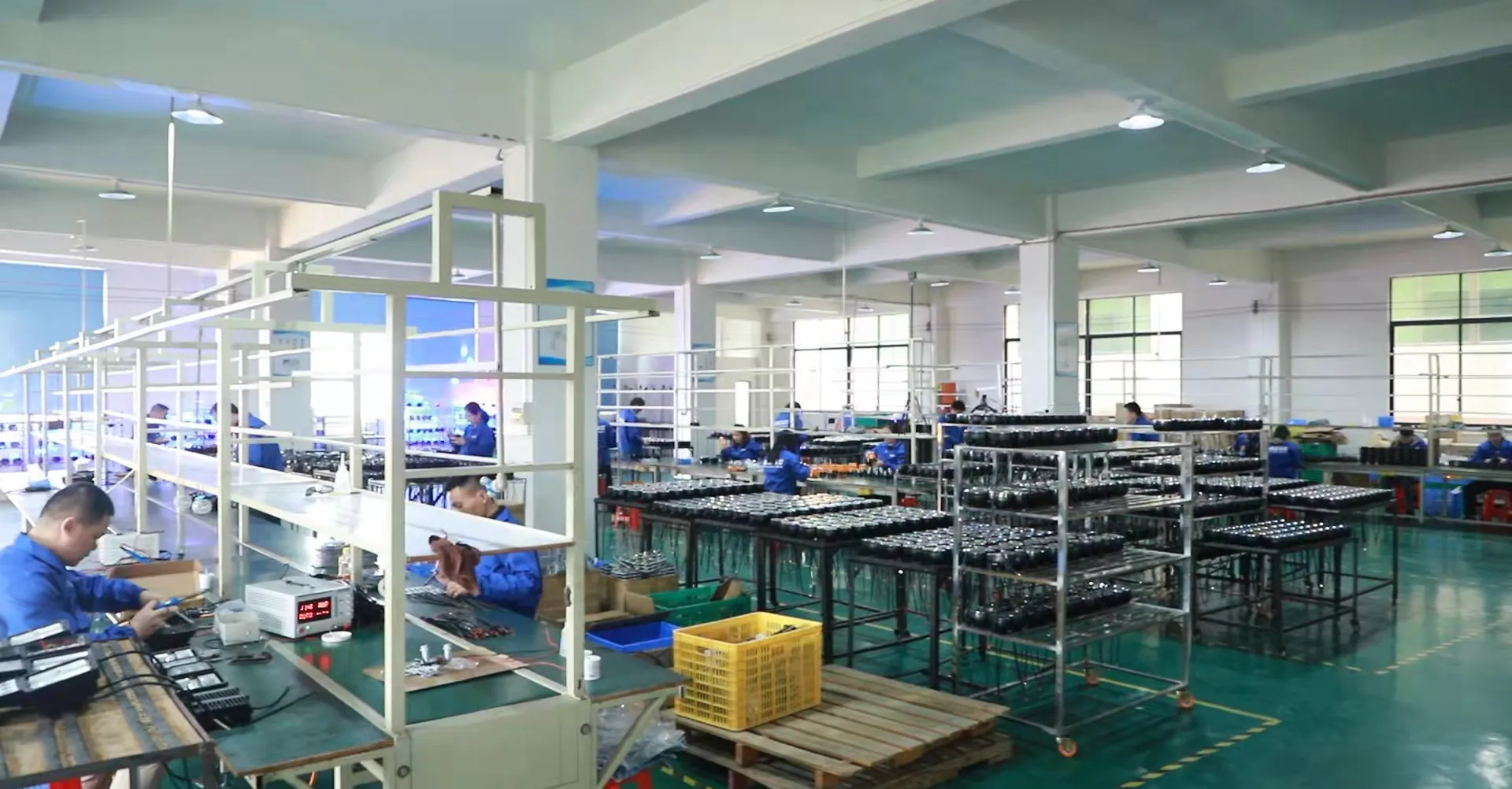
The first question every risk manager asks: does the OEM unit get the same factory as the catalog unit? The answer to demand from any supplier is yes, verifiably — same lines, same inspection gates, same component standards. On XRLL’s lines that means the nine-gate sequence applies to branded runs identically: incoming OSRAM and Cree chip verification, PCB and driver checks, weld and assembly inspection, IP68 sealing tests, photometric and beam-pattern measurement, high-and-low temperature aging, vibration and shock, electrical safety, and final pre-shipment inspection. Branding is applied after the product is engineered, not instead of it being engineered.
Certification carries the same discipline. Product marks — CE, ROHS, E-Prüfzeichen, DOT — attach to tested models, so a custom program needs the customized model to be the certified one, not a cousin. Where the customization touches optics, the photometric file changes with it; where it touches lasers, IEC 60825 compliance is re-confirmed for the new projection. Buyers should require the certification file for the exact custom model with the shipment, and treat “same family” answers as an open item. ISO 9001 covers the process behind all of it — the auditable, documented production system that makes batch traceability possible when a customer asks, two years in, about one specific unit.
Phasing Your First Program: What to Customize First
Programs succeed when they start where risk is lowest and learning is fastest. The natural sequence for a rental brand or logistics operator:
Phase one — logo and packaging on proven models. Choose the two or three light types the fleet uses most (typically blue spot and red zone for forklifts), apply branding, and run them through a standard duty cycle. This phase costs the least and teaches the most about the supplier’s logistics and communication.
Phase two — beam or projection adjustments where the application demands. Now that the relationship has a track record, commission pattern changes for the specific environments that motivated the program — a distinct projection for AGV corridors, a glare-controlled beam for cold aisles. Samples first, always.
Phase three — housing mold for the flagship line. With volumes proven and the specification stable, tooling investment becomes defensible for the SKUs that define the brand’s safety story. This is the phase that locks a competitor out of visual imitation.
Buyers who compress all three phases into one program usually discover the mistake at phase three, when a spec that seemed certain in the boardroom turns out wrong in the aisle. Phasing exists because the aisle is the judge.
For scope, platform options and the engagement flow described above, see XRLL’s OEM and ODM customization program, and the LED forklift light platform most private-label programs start from.
Scoping a Private-Label Safety Light Program?
Send XRLL your target models, fleet size and branding requirements — the sales team responds within 24 hours with a program quotation, customization scope, pre-production samples and the certification file for your market. Logo, beam pattern, projection pattern and housing mold customization all run on our own production lines.
E-Mail: service02@xrlledlight.com · Phone / WhatsApp: +86-15818025687
Frequently Asked Questions
How fast can a private-label program move from inquiry to production?
The quotation arrives within 24 hours of receiving specifications or a sample. What follows depends on customization level: logo programs move through sample confirmation and into production quickly because the platform is proven, while projection-pattern and housing-mold programs add engineering and validation stages. The sample-and-test stage is not a delay to negotiate away — it is the cheapest point in the program to be wrong.
Do we need different volumes for OEM versus ODM programs?
Volumes are quoted per program because they follow the customization level: logo programs ride existing production and carry lower commitments, while tooling-based customization involves mold investment that only pays back across larger volumes. Ask shortlisted suppliers to quote minimums, tooling and lead time together, in writing, against your specific specification — and be wary of anyone who names a universal number before seeing the brief.
Can custom lights keep the same certifications as catalog models?
Certification attaches to the tested model, so the customized model needs its own documentation path. Branding alone does not change test-relevant characteristics; beam-pattern and projection changes do touch optics, so the photometric evidence — and for laser products, IEC 60825 compliance — is re-confirmed for the custom version. Require the certification file for the exact custom model with every shipment and treat “same family” as an open item until it is closed in writing.
Who owns the housing mold we pay for?
That is a contractual term, and it should be stated explicitly in the program agreement: which party paid for the tool, who holds title, and what happens to it if the program ends. XRLL cuts its own tooling for custom housings in-house, which keeps mold iterations — and the ownership conversation — between the buyer and the party making the part, without a third toolmaker in the middle.


