AI Forklift Pedestrian Detection: How 360-Degree Camera Systems Work
The quarterly safety review at a large distribution center tends to follow a familiar script: operations plays a near-miss clip from an aisle intersection, the EHS manager asks what has changed since the last incident, and procurement is told to price one more layer of warning equipment. Mirrors went up years ago. Blue spot lights followed. The near-misses keep coming, because every one of those devices relies on the pedestrian noticing the truck. A forklift pedestrian detection system inverts the question: can the truck itself notice the pedestrian, and warn both parties before anyone has to react?
This article explains how 360-degree camera-based detection actually works — the camera layout, what the AI model is looking at, how a detection becomes an alarm — and what warehouse automation managers and AGV integrators should verify before writing one into a retrofit specification.
Key Takeaways
- Cameras cover what mirrors cannot. A mirror needs a person to look into it. A 360-degree camera array watches all sides of the truck at once and never blinks, which is what closes the blind-spot gap that mirrors, horns and proximity lights leave open.
- The detection window is measured in metres, not seconds. The XRL1341 system from XRLL detects pedestrians 6 to 7 metres away, which at a walking pace of 5 km/h gives roughly five seconds of warning before a possible contact point.
- Classification matters more than raw resolution. The value of an AI system is that it tells a person apart from a pallet, a pillar or a bin, so the alarm means something when it sounds.
- Alarm output is audible and visual. Both the operator and the pedestrian get an immediate cue — a sound inside the cab and a light signal at the truck — because either one may need to stop.
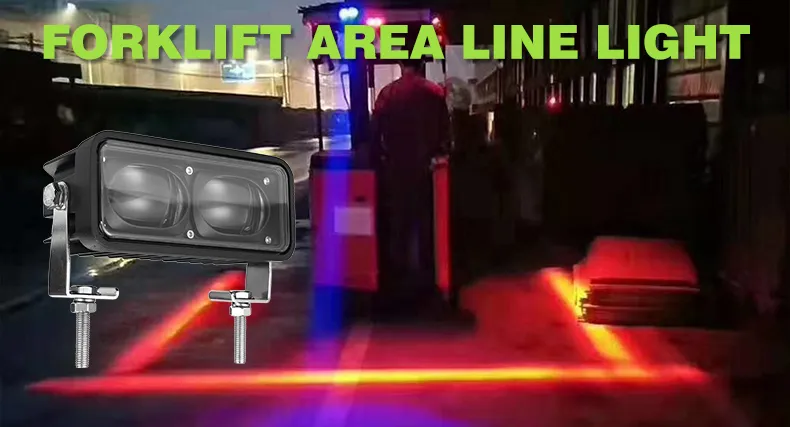
- Lights warn, cameras detect. A blue spot or red zone light assumes someone is looking. Camera detection works when nobody is looking. Mature retrofit specifications layer both rather than choose one.
Why Lights and Mirrors Stop at the Edge of the Blind Spot
Every passive warning device on a forklift shares one assumption: a human will notice the cue and act on it. The horn assumes the pedestrian hears it over ambient noise that routinely exceeds 80 dB in a working warehouse. The mirror assumes the operator scans it at the right moment, every time, through a thousand repetitions per shift. Blue and red projection lights assume the pedestrian glances down at the floor before stepping into a travel path. None of these assumptions is unreasonable, and each device prevents real accidents — but each one fails in a specific, repeatable way: attention.
Attention fails predictably at intersections, dock doors, rack ends and cross-aisles, exactly where sight lines are shortest and traffic is mixed. It also fails in facilities that run mixed traffic with AGVs and automated shuttles, where people learn over time that moving equipment follows fixed, predictable paths and stop checking as carefully. Blind spots compound the problem: a loaded truck with a tall mast can hide an entire pedestrian standing two metres from the rear corner.
A camera-based detection system attacks the failure at its root. Instead of asking people to stay alert, it watches the space around the truck continuously, decides whether a person is present, and pushes an alarm into the cab and onto the truck itself. The remaining sections walk through how that pipeline is built.
The Anatomy of a 360-Degree Camera Detection System
1. Camera layout and coverage
Around-view coverage does not come from one wide-angle camera. A single forward-facing lens leaves the flanks and the rear unwatched, which is where most reversing and cornering incidents begin. The practical architecture is a ring of cameras — three in the case of the XRL1341 — each assigned a sector of the truck’s surroundings so their fields of view overlap and close the gaps. Mounting points sit high enough to see over loads but low enough to keep people within the vertical field, and the housings are sealed because the cameras live in the same spray, dust and washdown environment as the rest of the truck.
The overlap between camera sectors is the quiet engineering detail that separates a usable system from a demo. Where two fields of view meet, a person walking across the seam must stay tracked by at least one lens; otherwise the system would flicker in and out at exactly the angles where trucks and people meet most often.
2. What the AI model actually classifies
Raw pixels are not useful on their own. The onboard model is trained to recognise the shape, motion pattern and proportions of a human body — standing, walking, crouching, partially hidden behind racking — and to distinguish it from the thousands of non-person objects a truck passes every hour: pallets, cage trolleys, pillar wraps, waste bins, other trucks. That distinction is the entire point of the word “detection” in the product name. A motion sensor trips on anything that moves; an AI classification layer trips on something that looks and moves like a person, which is what keeps the alarm credible enough that operators keep responding to it.
Classification happens on the vehicle. The system does not depend on site Wi-Fi, a server room or a cloud connection to raise an alarm, which matters in cold stores, steel racking aisles and other spots where wireless coverage is unreliable.
3. From detection to alarm
Once the model flags a person inside the monitoring zone, the alarm path is deliberately simple: an audible alert inside the cab tells the operator, and a visual signal on the truck warns the pedestrian and anyone nearby. There is no menu, no confirmation step and no dependence on the operator’s judgment about severity. The 6 to 7 metre detection envelope of the XRL1341 is what makes this pipeline effective rather than merely fast: at a typical pedestrian walking speed of 5 km/h, a person six metres from the truck is roughly five seconds from the closest approach, long enough for a loaded truck travelling at restricted speed to stop well short of the hazard.
Inside the XRL1341: The Manufacturer’s Published Specification
XRLL, a forklift and industrial lighting manufacturer founded in Foshan in 2011, publishes the XRL1341 AI pedestrian detection system with the following headline specifications, each of which maps to a buying decision:
- Three AI cameras with 360-degree surround coverage. The ring layout described above, with overlapping sectors so no side of the truck goes unwatched.
- 6 to 7 metre advance detection. The system flags pedestrians several metres before a possible contact point, converting the last moment of an encounter into a workable warning window.
- Immediate audible and visual alarms. The operator hears it; the surroundings see it. Both channels fire on detection without operator input.
- IP67 sealing. Dust-tight and protected against temporary immersion, which covers dock spray, washdown routines and cold-store condensation.
- Alignment with OSHA 1910.178. The system is positioned to support facilities working toward the powered-industrial-truck requirements that govern most US operations.
The full system page with configuration details is maintained on the XRLL AI safety system page, and specification documents are issued on request for procurement files.
How the Four Warning Layers Compare
Camera detection does not replace projection lights; it sits at the top of a stack. The table below summarises what each layer contributes in a warehouse retrofit, and why mature specifications keep two or more of them on the same truck.
| Layer | What It Communicates | Who It Protects | Main Limit | Typical Position |
|---|---|---|---|---|
| Blue spot light | “A truck is approaching this floor area” | Pedestrian, at blind corners and doorways | Requires the pedestrian to look at the floor | Front or rear, low on the chassis |
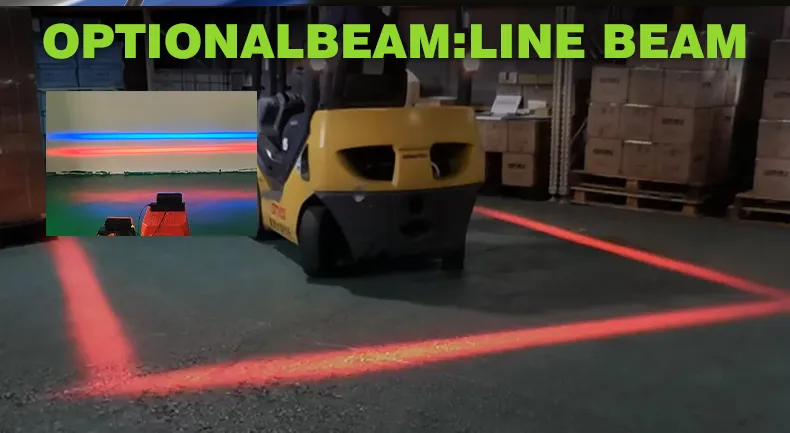
| Red zone light | “Stay outside this boundary around the truck” | Pedestrian, in shared aisles | Static boundary; no awareness of people | Side-mounted, projecting a line or arc |
| Laser line projector | A crisp, high-contrast safety line on the floor | Pedestrian, at zone edges and crossings | Line visibility drops in bright ambient light | Mast or chassis, angled at the floor |
| AI camera detection (XRL1341) | “A person is within the monitored zone — now” | Operator and pedestrian simultaneously | Higher unit cost and integration effort than a lamp | Three sealed camera heads around the truck |
The pattern to take away: projection lights are constant-state cues that cost little and prevent a great deal, but they are deaf and blind to whether anyone is actually present. Camera detection is event-driven — it only speaks up when a person enters the zone — which is exactly the property that lights cannot offer.
Retrofit Questions Automation Managers Ask First
Power and wiring
An AI detection system draws more current than a warning lamp, so the retrofit budget should include a check of the truck’s auxiliary circuit rather than a simple tap into the lamp loop. Installers also need a mounting plan for the camera harness that keeps wiring away from mast channels and pinch points. None of this is exotic, but it is the difference between a clean commissioning and a week of rework.
Integration with AGV and shuttle fleets
Integrators evaluating the XRL1341 for automated or semi-automated fleets usually ask how alarm output reaches the vehicle controller. The practical approach is to treat the system as a safety sensor layer that reports detection events, then map those events into the fleet’s existing stop or slow-down logic. Because classification and alarm triggering happen on the vehicle, the detection layer keeps working even where site networks are patchy — a common situation in steel racking and cold stores.
Environment
IP67 covers dust and temporary immersion, which handles dock spray and washdown. For chilled and frozen operations, buyers should confirm the rated temperature window for the camera heads during specification, and ask for the sealing test records. The manufacturer’s in-house test regime includes high and low temperature aging, vibration and shock testing, and electrical safety checks on every production batch, which is the evidence base to request.
How to Verify Vendor Claims Before You Sign
Detection distance, latency and reliability are exactly the numbers a buyer cannot check from a brochure. The verification routine that holds up in procurement review looks like this:
- Ask for the test basis of every quoted number. “6 to 7 metres” should come with the test conditions: walking adult, indoor lighting, straight approach. A vendor who documents conditions can be audited; one who cannot, can only be trusted.
- Request a sample unit and stage a live trial. Walk-test the exact failure scenarios from your own near-miss log — doorway emergences, rack-end corners, reverse-and-stack moves — and record where the alarm fires.
- Check the sealing and environmental evidence. IP ratings claimed on the datasheet should be supported by in-house or third-party test records; the same applies to vibration and temperature aging.
- Review the compliance file. For a US-facing operation, confirm how the system supports OSHA 1910.178 obligations; for Europe, CE documentation; for photobiological safety of the light elements, an EN 62471 report.
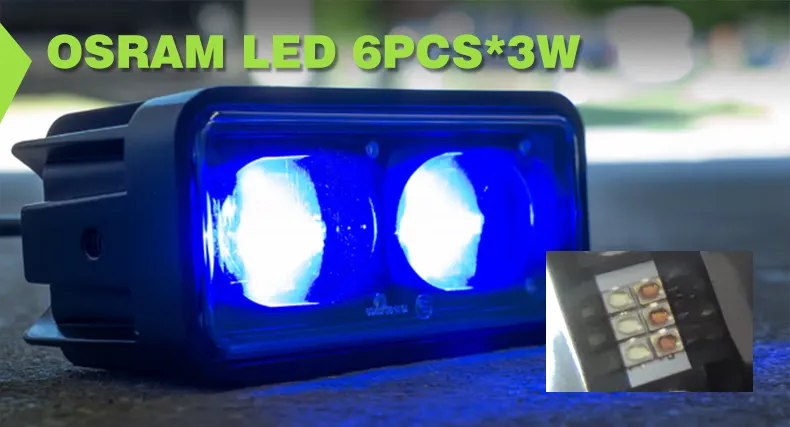
- Inspect the manufacturing depth behind the product. A supplier that builds its own units controls its own quality. XRLL runs a 17,000-square-metre factory in Foshan with four assembly lines, daily output above 10,000 units, and a nine-step quality process that runs from incoming LED chip inspection (OSRAM and Cree sourced) through photometric and electrical testing to final pre-shipment inspection. The company holds ISO 9001 certification, and its lamp portfolio carries CE, ROHS, E-mark and DOT documentation.
That last point deserves weight in an AI purchase. Consumer-grade camera modules fail in industrial vibration and thermal cycling in ways that only show up months after commissioning. A manufacturer that routinely survives nine in-house inspection gates — including IP-sealing tests, photometric verification and vibration and shock testing — is far more likely to ship camera heads that hold calibration for years, and to support them when one does not.
Specifying AI Pedestrian Detection for a Fleet?
Send XRLL your truck types, aisle layout and the near-miss scenarios you need covered. The sales team responds within 24 hours with configuration options, specification documents and evaluation units for a live trial. OEM and ODM customization is available for integrators, and every system ships from the company’s own factory in Foshan with ISO 9001, CE, ROHS, E-Prüfzeichen, PUNKT, IEC 60825 and EN 62471 documentation on file.
E-Mail: service02@xrlledlight.com · Phone / WhatsApp: +86-15818025687
Frequently Asked Questions
Does a 360-degree forklift pedestrian detection system replace blue safety lights?
NEIN. The two layers do different jobs. Blue spot lights give a constant visual cue that warns pedestrians before they step into a travel path, and they cost very little per truck. A camera-based forklift pedestrian detection system adds event-driven awareness: it identifies a person inside the monitoring zone and triggers audible and visual alarms immediately. Facilities with serious pedestrian traffic typically run both, because lights cover the pedestrian who is looking and detection covers the moment when nobody is.
How far away can the XRL1341 detect a pedestrian?
The published detection envelope is 6 to 7 metres in advance of a possible contact point. At an average walking speed of 5 km/h, that is roughly five seconds of warning, enough for a truck moving at restricted indoor speed to stop well clear. Buyers should confirm the exact test conditions behind the figure and validate it in a site trial, because pillar layouts, racking and ambient lighting all influence real-world performance.
Will the system trigger false alarms on pallets, trolleys or other trucks?
The AI classification layer is trained to distinguish human shapes and movement patterns from static and moving objects such as pallets, cage trolleys and other vehicles. That filtering is what keeps alarm credibility high; a system that alarms on every moving object trains operators to ignore it. During a sample trial, walk the busiest aisles and confirm that alarms track people rather than freight before approving rollout.
Can the XRL1341 survive washdown and cold-store conditions?
The system is sealed to IP67, meaning it is dust-tight and protected against temporary immersion, which covers dock spray, condensation and routine washdown. Every unit also passes the manufacturer’s in-house sealing, high and low temperature aging, and vibration tests before shipping. For freezer installations, confirm the rated operating temperature window for the camera heads during specification so the datasheet matches your coldest zone.
How does camera detection support OSHA 1910.178 compliance efforts?
OSHA 1910.178 governs powered industrial trucks in US workplaces, including operator and workplace-related safety obligations. A detection system supports those programs as an engineering control: it warns operators of pedestrian presence in blind zones and creates an objective, documentable safeguard that can be referenced in training and hazard assessments. The XRL1341 is designed to align with OSHA 1910.178, and buyers should file the vendor’s compliance documentation alongside their own hazard-analysis records.


