Forklift Safety Light Quality: Warranty and Failure Rate Benchmarks
A materials-handling buyer signs a three-year supply agreement for forklift safety lights, and the paperwork looks clean: warranty clause included, unit price negotiated, delivery schedule locked. Eighteen months later the claims start arriving — units dead at a cold-storage site, housings fogged from the inside, a batch that flickers on 48-volt trucks. The warranty document gets opened, and the argument begins. Forklift light warranty quality is not decided in that contract clause. It is decided on the factory floor, months before the first unit ships, and the buyer’s job is to verify it there.
This article is written for procurement managers preparing long-term fleet contracts. It covers the failure modes that actually take forklift safety lights out of service, the test gates that predict those failures, how to read a supplier’s reliability claims without being fooled by them, and which warranty terms separate a real commitment from a marketing sentence. Where we describe our own processes, we describe what can be verified — factory tests, certification files and inspection records — because that is exactly the evidence a professional buyer should demand from any supplier, including us.
Key Takeaways
- Five failure modes cover most field losses. Water ingress past the seal, vibration-fatigued solder joints, driver and PCB electrical faults, LED lumen depreciation, and physical damage to lens or housing explain the bulk of forklift light returns — and each one has a specific factory test that exposes it before shipping.
- A failure-rate number means nothing without its basis. Ask what sample base, duty cycle and observation period sit behind any quoted percentage. Suppliers who publish honest aging and vibration test results are giving you more usable evidence than a bare “0.5% failure” claim.
- Nine inspection gates map directly to field reliability. From incoming OSRAM/Cree chip verification through IP68 sealing tests, thermal aging, vibration shock and final pre-shipment inspection — a documented gate sequence predicts year-two performance better than any warranty sentence.
- Read the warranty as an engineering statement, not a legal one. Coverage scope (LED, driver, housing, workmanship), replacement-versus-repair handling and defined response time reveal how much failure-free life the manufacturer actually engineered in. Terms quoted vaguely are terms that will be argued later.
- Demand the evidence chain before the bulk order. Test reports matched to your quoted model numbers, batch traceability and a written statement of warranty terms for your program cost nothing to request and filter out weak suppliers in one email round.
How Forklift Safety Lights Actually Fail
Fleet failure data across warehouse, port and cold-store operations keeps pointing to the same five mechanisms. Understanding them changes how you evaluate a quotation, because every one of them traces back to a design or process decision the manufacturer either made or skipped.
Water and moisture ingress. The most common early failure. A housing that is not sealed under controlled pressure, or a lens joint filled by hand on an unmonitored line, lets wash-down water and condensation reach the electronics. The symptom is fogging under the lens, then corrosion on the PCB, then a dead unit. Ingress protection ratings exist precisely for this — but a rating printed on a datasheet and a rating verified on every production batch are two different things.
Vibration fatigue. A forklift is a vibration machine with a mast attached. Forks slam down, docks have expansion joints, yard trucks cross gravel. Constant mechanical stress works on solder joints and connector crimps until they micro-crack. The failure signature is intermittent — a light that works in the workshop and cuts out on the truck. This is the failure mode that separates automotive-grade construction from commodity assembly.
Driver and PCB electrical faults. The LED itself is rarely the first component to go. Driver circuits carrying unverified components, or boards without reverse-polarity and surge protection, fail when truck electrical systems spike during starting or load dumping. Wide-voltage input design (10–110V DC coverage, as on our industrial warning-light platforms) and reverse-polarity protection exist exactly for mixed fleets where 12, 24, 48 and 80-volt trucks share one parts list.
LED lumen depreciation. LEDs rarely fail dead; they fade. Chip quality determines the curve — which is why incoming inspection that verifies OSRAM and Cree components at the door says more about year-three light output than any sales sheet. A projected safety zone that has dimmed below visibility is a failed safety device, even if it technically still lights.
Physical and environmental damage. Impacted PC lenses, UV-yellowed covers, cables chafed at the mast — some of this is site reality rather than supplier fault. But material choices set the ceiling: die-cast aluminium housings with hard glass covers and stainless brackets tolerate dock abuse that thin polycarbonate shells do not, and double-insulated silicone wiring specified for very low and high temperatures survives cold-store duty that cracks ordinary PVC.
What a Credible Failure-Rate Claim Looks Like
Buyers increasingly ask suppliers for a failure-rate number, and suppliers increasingly have one ready. The number itself is nearly worthless; the basis behind it is everything. Three questions turn a claim into evidence.
First, what is the sample base and observation window? A “0.3% failure rate” computed from twelve months across 40,000 units in mixed duty is a meaningful statistic. The same number from a pilot batch of 300 units in one climate-controlled warehouse is an anecdote. Second, what counts as a failure? Some suppliers count only dead-on-arrival units; a serious dataset includes faded output, intermittent faults and seal fogging. Third, what duty cycle did the population experience? Vibration exposure on a yard truck and a warehouse reach truck are different sports.
When a supplier cannot answer these questions but can show you the factory gates that prevent the failures — sealing tests on every batch, thermal aging runs, vibration shock tables — you are looking at honest engineering. When a supplier offers a spectacular percentage and no process detail, you are looking at marketing. At our Foshan factory we take the first path: we publish the test sequence, we run it on production batches, and we put buyers in contact with the inspection records for their own orders. Reliability claims you cannot verify are liabilities you will carry for the length of the contract.
The Test Gates That Predict Field Failure
A nine-step inspection sequence runs through our production, and each step exists because it intercepts one of the failure modes above. The sequence is worth studying even if you never buy from us, because it is a template for interrogating any manufacturer’s quality process.
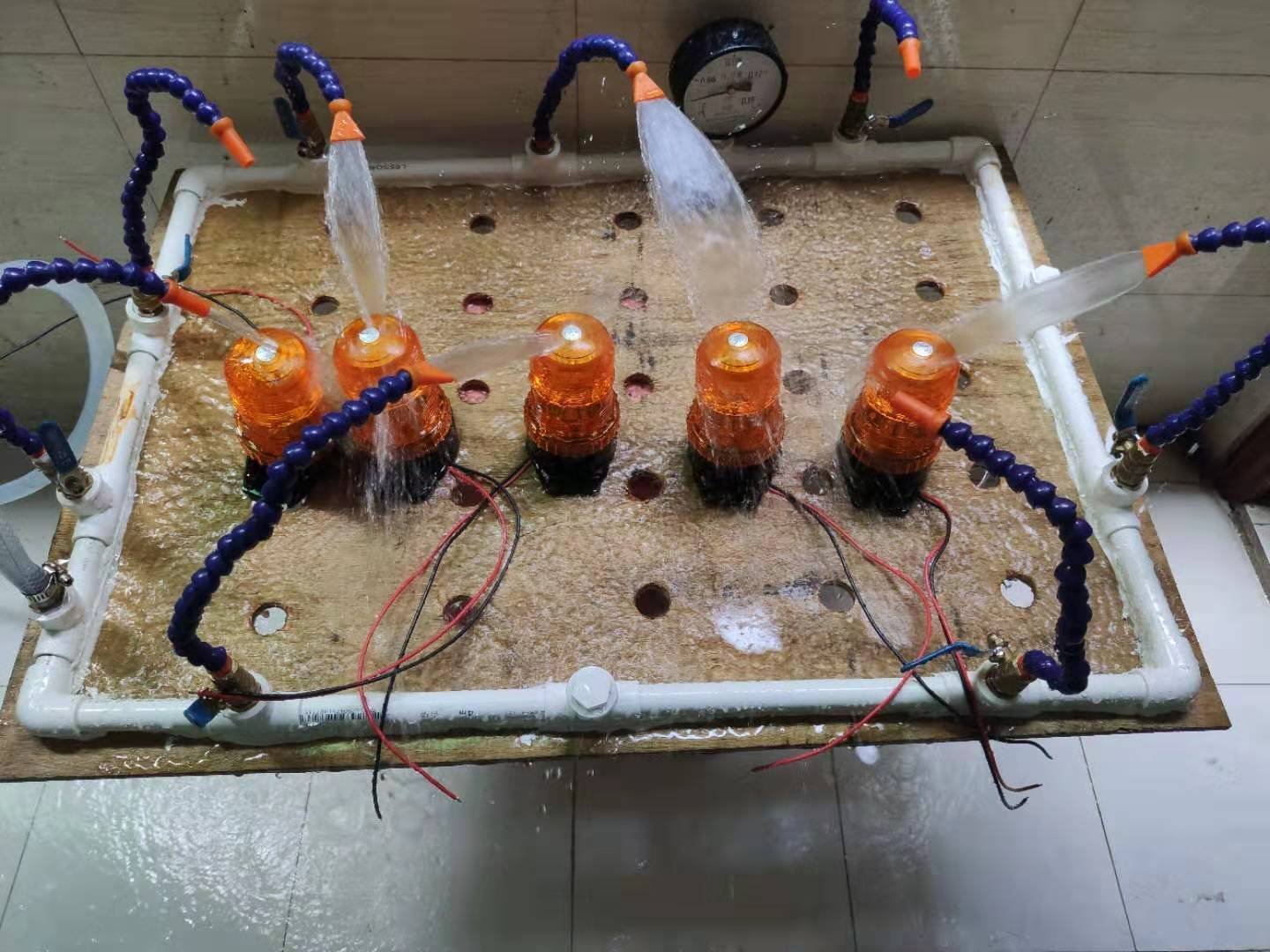
Incoming inspection verifies LED chips against the OSRAM and Cree specification before anything is assembled — intercepting lumen-depression risk at the door. PCB and driver checks screen electrical components before they can carry a latent fault into a finished light. Weld and assembly inspection catches the workmanship gaps that become vibration failures. The IP68 sealing test puts housings under water and pressure to find the leak a datasheet cannot. Photometric and beam-pattern testing confirms the light performs to output specification — the difference between a visible safety zone and an expensive glow. High-and-low-temperature aging runs finished units through thermal stress that accelerates driver and solder weaknesses. Vibration and shock testing reproduces dock and yard punishment. Electrical safety checks verify behavior across the rated voltage span. A final pre-shipment inspection closes the sequence on every order.
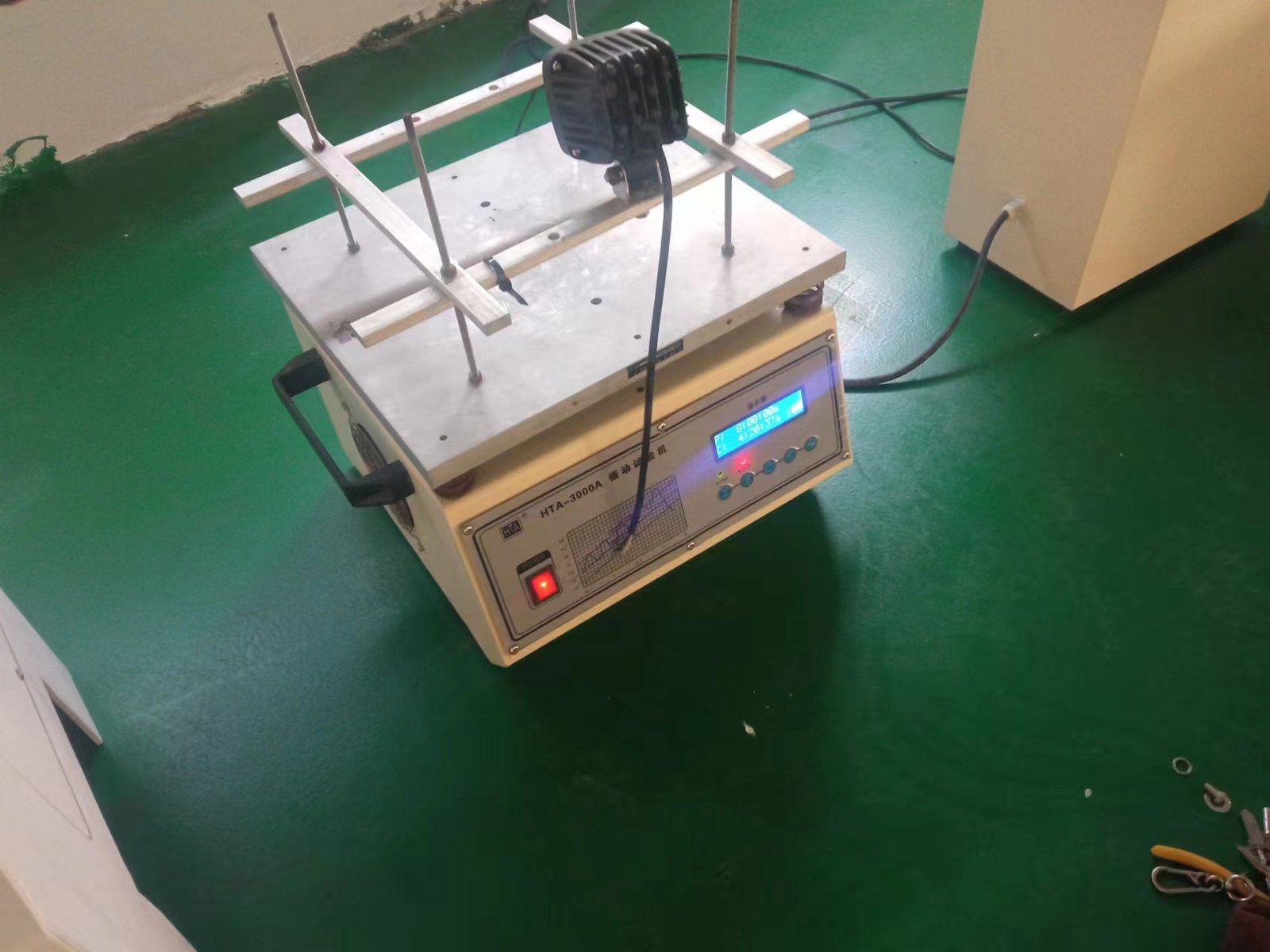
Two questions turn this from a factory tour into procurement intelligence. Ask which gates run on every unit and which run per batch — honest suppliers answer immediately, because the answer is a production-planning fact, not a secret. Then ask what happens to a unit that fails a gate. Rework, scrap or quietly repackaged: the third answer tells you everything about the failure rate you will inherit in year two.
Reading a Warranty Like an Engineer
A warranty document is best read as the manufacturer’s own forecast of its failure rate. A supplier who genuinely engineered for a long failure-free life will write specific terms; a supplier who did not will write broad, warm language with narrow exclusions. Four elements deserve line-by-line attention.
Scope. Does the warranty name the components — LED, driver, housing, workmanship — or only “manufacturing defects” as a catch-all? Component-named coverage is harder to argue with. Remedy. Replacement, repair or credit, and who pays freight on a claimed unit. International fleet programs live and die on this clause; a warranty that requires returning units halfway around the world at your cost is a discount, not coverage. Response commitment. A defined handling and response time — our sales team operates on a 24-hour response standard — converts a warranty from paper into an operational agreement. Exclusions. Physical impact damage, unauthorized modification and out-of-spec voltage are legitimate exclusions. Vague “improper use” language that could cover a forklift being a forklift is not.
On duration: treat any warranty length as a commercial term to be quoted and confirmed in writing for your specific program, not a generic figure from a website. The engineering question underneath it — how many hours of sealed, vibration-tested life the product carries — is answered by the test gates and component specification, and those you can verify before signing. Warranty terms for a specific fleet agreement, including duration, MOQ and payment structure, should be requested from the supplier in writing as part of the proforma process; a manufacturer who resists putting terms in writing before the order is telling you how the claim will go after it.
A Quality-Evidence Checklist for Long-Term Contracts
The table below compresses this article into an audit you can run against any shortlisted supplier — including ours. Run it before the contract, not after the first claim.
| Evidence Item | Strong Signal | Warning Signal |
|---|---|---|
| Failure-rate basis | Sample base, duty cycle and failure definition stated with the number | A bare percentage with no basis, or “almost zero failures” |
| Sealing verification | IP68/IP67 tested as a production gate on batches, with records | Rating quoted from a component supplier’s brochure |
| Vibration and thermal aging | Named equipment and pass criteria; every unit or defined batch sampling | “Tested to international standards” with no equipment or criteria |
| Chip provenance | Named brands (OSRAM, Cree) verified at incoming inspection | “Imported chips” or unbranded components |
| Certification files | Full CE/E-mark/DOT/ROHS/ISO 9001 reports; model numbers match quotation | Logo screenshots, or certificates for “a similar family” |
| Traceability | Returned unit traceable to batch, chip lot and test record | No batch records, or records that appear after the question |
| Warranty documentation | Scope, remedy, response time and exclusions written into the quotation | Terms promised verbally or “confirmed after the order” |
None of these items costs the supplier anything to provide if the underlying work was done. That is precisely what makes the checklist effective: the gap between “yes, here is the report” and “we will check with the factory” is the gap between a three-year contract and an eighteen-month claims file.
The same evidence standard applies across our own forklift safety range — blue spot and red zone warning lights, LED driving lights and AI pedestrian detection — and the engineering story behind it is on the XRLL company and manufacturing page, where the nine-gate inspection process and certification files are documented.
Verifying Quality Claims Before a Fleet Contract?
Send your truck list, duty cycles and target models. The XRLL team responds within 24 hours with the test sequence applied to your models, the certification file, and written warranty terms quoted for your program — plus evaluation samples so your own maintenance team can judge before the bulk order.
Email: service02@xrlledlight.com · Phone / WhatsApp: +86-15818025687
Frequently Asked Questions
What is a realistic failure rate for forklift safety lights?
It depends heavily on duty cycle — a cold-store reach truck and a yard truck punish lights differently. Rather than chasing a universal number, compare suppliers on equal footing: ask for the sample base, observation period, duty cycle and failure definition behind any quoted percentage, and ask which factory tests (sealing, vibration, thermal aging) run on the shipped batches. A documented test sequence is more predictive than a bare statistic.
What causes most forklift light failures in the field?
Five mechanisms cover most returns: water ingress past the housing seal, vibration-fatigued solder joints and connectors, driver or PCB electrical faults, gradual LED lumen depreciation, and physical or environmental damage. Each maps to a specific factory countermeasure — IP68 sealing tests, vibration and shock testing, electrical safety checks, verified OSRAM/Cree incoming chips, and die-cast aluminium or hard-glass construction.
How long should a forklift light warranty last?
Warranty length is a commercial term that should be quoted in writing for your specific program and volumes — treat any generic figure as an opening point, not a fact. What matters more is what the terms cover: named components (LED, driver, housing, workmanship), a defined remedy and freight responsibility, a response-time commitment, and exclusions narrow enough that normal forklift duty cannot be argued out of scope.
Can we get test reports and inspection records before ordering?
Yes — and you should expect the same from any supplier. Request the full certification files (CE, E-mark, DOT, ROHS, ISO 9001) with model numbers matching your quotation, a description of the production test gates, and batch traceability for your orders. Evaluation samples for a pilot truck let your maintenance team confirm real-world behavior before the bulk commitment.
Do LED forklift lights need scheduled maintenance?
Far less than halogen equivalents — there are no bulbs to replace, and quality LED platforms are engineered for service lives above 50,000 hours. A practical fleet routine is a quarterly visual check: lens clarity (fogging signals a seal issue), output level against a new reference unit, cable condition at the mast, and mounting hardware torque. Catching a faded or fogged unit during a walkaround keeps a safety device from failing an inspection.


