
LED Work Light Wattage Guide: 10W to 150W Application Matching 2026
Ask five procurement officers what “a 50-watt work light” means and you will get five answers, because wattage is the least informative number on the box and the one every quote request starts with. A led work light wattage guide exists precisely because the industry prints power draw on the front of the datasheet and light output in the fine print — the buying public learned to ask for watts from the halogen era, and suppliers let them keep doing it. The truth a purchasing engineer eventually writes into the specification: watts are the electricity bill, lumens are the light, and the fixture’s optics, drive current and thermal design decide what a given wattage actually delivers on the task surface. This guide maps the 10 W to 150 W range the way equipment procurement teams should read it — by application, by electrical infrastructure, by the lumen expectations a competent supplier will put in writing — so the wattage column becomes the last thing you compare, not the first.
चाबी छीनना
- Specify the illuminance you need at the work surface (lux at a stated distance), then let lumens drive wattage — never the reverse; two 50 W fixtures can differ by a factor of two in delivered light.
- Fixture-level efficacy, not chip-level, is the honest comparison: a 100–160 lm/W package spec becomes 70–120 lm/W at fixture level after driver loss, optics and thermal derating, and cheap units fall below that.
- The application ladder is consistent across brands: roughly 10–20 W for cab and task lighting, 30–50 W for machine decks and small yards, 50–100 W for work areas and truck beds, 100–150 W-plus for large-area night coverage.
- Electrical infrastructure caps the decision before lumens do: 12 V circuits, cable gauge and fuse ratings limit what a 100 W-plus fixture can actually be on older machine electrical systems.
- Higher wattage buys heat as much as light — thermal mass and driver quality at 100 W determine whether the lamp still delivers rated output at hour eight, every night.
What the Wattage Number Actually Buys You
A work light’s wattage is DC power in: volts times amps at the fixture’s input. What happens between that number and the photons leaving the lens is where supplier quality lives. Modern LED packages from the chip classes XRLL and other serious manufacturers use — OSRAM and Cree components are the industry shorthand — produce on the order of 100 to 160 lumens per electrical watt at the package level under test conditions. At fixture level, subtract driver conversion loss (typically 10–20% on good switch-mode electronics), optical loss through reflectors, lenses and diffusers (10–25% depending on beam design), and thermal derating as the housing soaks up heat in a sealed IP-rated body. A well-engineered 30 W fixture delivering 2,700–3,600 raw lumens at the package might emit 2,200–3,000 measured lumens — and a badly engineered one might emit 1,600 while the box still says 30 W. The procurement consequence: wattage answers “can my machine electrical system feed it,” and the photometric report answers “does it light the job.” Both belong on the purchase order; neither alone is a specification.
The Application Ladder: 10 W Through 150 W, Matched to Tasks
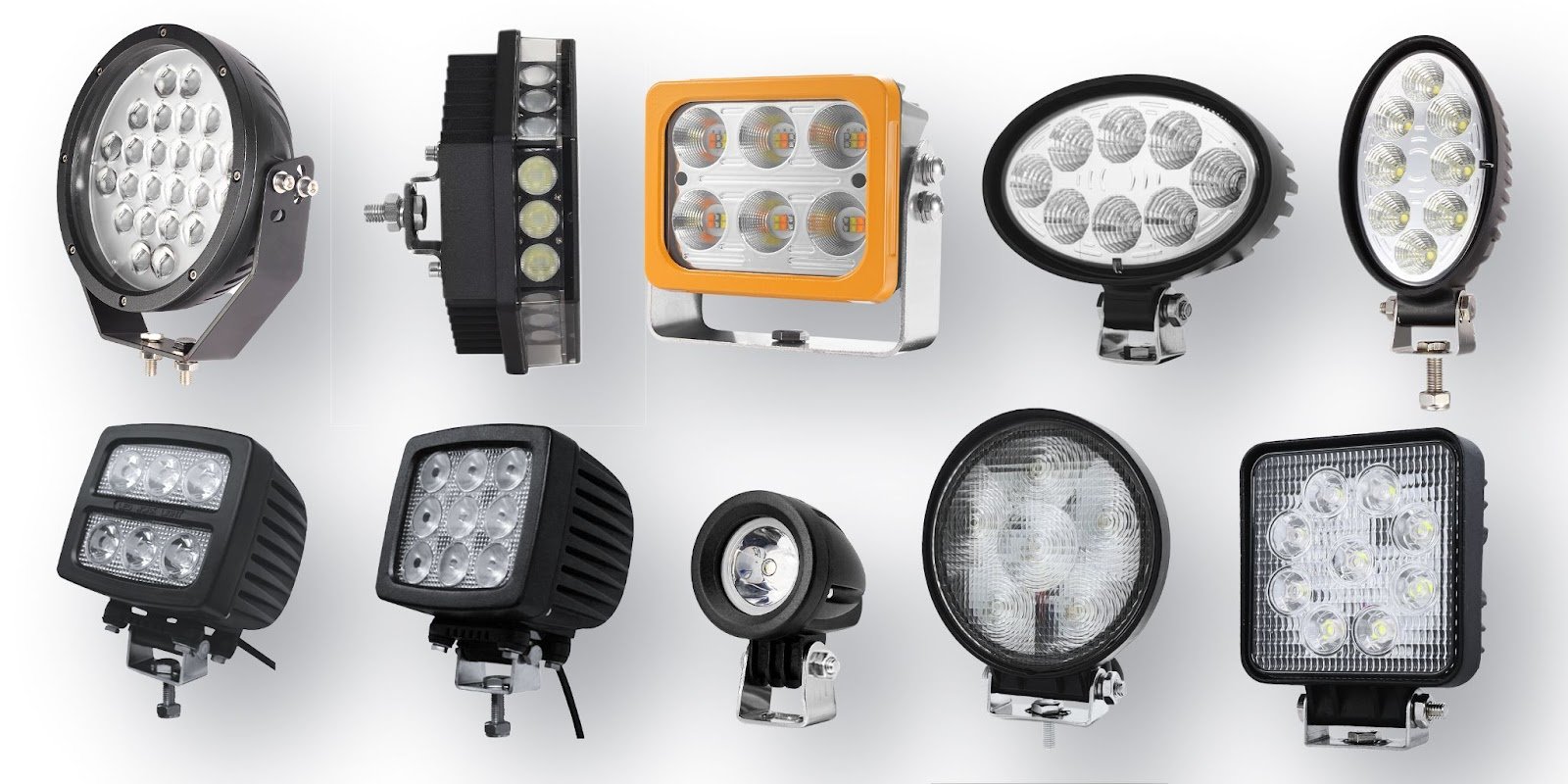
10–20 W: Cab, Task and Perimeter Detail Light
At this end sit the lights crews point at a job, not a field: cab reading and control-panel illumination, tailgate task lighting, walk-behind equipment, gate and step markers, and the small magnetics that live inside service vans. Expect roughly 800–2,000 lumens from competent fixtures. The engineering questions are heat sinking inside enclosed spaces (ए 15 W lamp in a sealed cab mount is a convection problem), glare control at close working distance, and whether the beam is flood enough for hand work. Electrical load is trivial — a dozen of these won’t trip a machine circuit — which is why this band is where fleet retrofits usually start.
30–50 W: Machine Decks, Truck Beds and Small Work Areas
The volume workhorse band: deck lights on loaders and diggers, box lights on delivery trucks, tow-head and wash-bay illumination, compact site areas up to a couple of hundred square meters at practical mounting heights. Expect 2,500–5,000 lumens from good fixtures. This is also the band where the difference between raw and effective lumens shows up fastest: at 40 W a lamp on a 12 V system draws around 3.3 A, and five of them on one fused circuit is 17 A of continuous load — cable sizing and fuse coordination stop being theoretical. For mobile fleets, the 30–50 W class is where night-work retrofits usually land after the first few jobs, when the 15 W task lamps prove insufficient but a lighting tower is absurd.
50–100 W: Work Zones, Yard Faces and Machine Mounts at Height
This band covers the real “work lighting” territory: excavator and loader boom mounts throwing light to the bucket tooth line, quarry primary screens, laydown yards, agricultural handling areas and small-airport apron tasks. Expect 4,000–9,000 lumens. Two engineering lines belong in the specification at this level: thermal design (an 80 W fixture in die-cast aluminum with stated maximum ambient, not a heat-sink-free shell that derates after 20 minutes) and optics quality — at these power levels, beam choice (flood, work spot, combo) decides whether the extra watts land on the task or spill into the sky and the operator’s eyes. A 60 W lamp with correct optics routinely outperforms a 90 W lamp with none, at lower electrical load.
100–150 W+: Large-Area Night Coverage
Approaching a half horsepower of electricity in one housing, this band serves area coverage: perimeter towers, port container rows, quarry faces, large laydown yards and mobile lighting masts. Expect 9,000–18,000-plus lumens where the manufacturer is honest. Here the electrical question sharpens: 150 W at 12 V is 12.5 A through cable that must be sized, fused and routed accordingly — many machines and trailers physically cannot support this class, which is why 24 V variants and AC light-tower formats exist. On mains-powered or generator-backed sites, 100–150 W LED fixtures have replaced 400–1000 W metal-halide towers across rental fleets; the meaningful spec becomes lux at the work plane and uniformity, with a photometric file to prove it, not the wattage headline. Heat management defines the product tier at this level — thermal design, driver component ratings and the sealing compromise that keeps IP protection working through thousands of heat-cool cycles.
Wattage vs Lumens vs Lux: Putting the Three Numbers in Order
The correct order of specification runs from the task backward. First, the illuminance requirement: general walking areas around 20–50 lux at grade, active hand work 200–500 lux, detailed inspection 500 lux and up — figures site lighting design has used for decades, and the ones safety officers will ask about. Second, lumens: the fixture output needed to deliver that lux across the target area at the mounting height available, with spacing and uniformity handled by the optics pattern. Third, watts: whatever the chosen fixtures draw, checked against the electrical supply that actually exists. Reversing the order — starting from “we need 100 watts” — is how fleets end up with lamps too bright for the space they illuminate (glare complaints, operator blindness at the cab) and circuits that trip on cold-morning inrush. When a supplier cannot hand you an IES or photometric file for a 50 W fixture, that tells you the optics were never engineered, only assembled.
The Wattage Table Buyers Should Hand Suppliers
| Wattage Band | Typical Fixture Lumens (well-built) | 12 V / 24 V Current Draw | Representative Applications | Spec to Demand |
|---|---|---|---|---|
| 10–20 W | 800–2,000 lm | ~0.8–1.7 A @12 V | Cab, task, step/tailgate, van interior | Glare rating, mounting envelope, seal quality |
| 30–50 W | 2,500–5,000 lm | ~2.5–4.2 A @12 V | Machine decks, truck boxes, small areas | Photometric file, IP class, circuit load plan |
| 50–100 W | 4,000–9,000 lm | ~4–8+ A @12 V (24 V preferred) | Boom mounts, yard faces, handling areas | Thermal design & max ambient, beam options |
| 100–150 W+ | 9,000–18,000+ lm | ~8–12.5 A @12 V; size cable/fuse | Perimeter/port/quarry coverage, towers | Lux/uniformity layout, driver ratings, storm rating |
Ranges, not promises: the well-built column assumes 70–120 lm/W fixture-level efficacy, and the spec-demand column is what separates an engineered fixture from a chip-on-board in a housing. A supplier who fills this table per model — measured lumens, stated drive current, beam options — is demonstrating competency before you ever ask about price.
Where Wattage Thinking Goes Wrong: Four Procurement Mistakes
Mistake one: comparing fixtures across brands by watts. Two 50 W lamps with different optics and drive strategies can differ 2:1 in delivered light; the photometric file, not the wattage, is the comparison. Mistake two: ignoring the electrical ceiling. LED retrofits of 150 W into machines designed around 55 W halogens overload wiring long before crews notice; current draw, inrush and fuse coordination belong in the retrofit survey. Mistake three: buying headroom nobody asked for. A 90 W lamp over a 4×6 m workbench is a glare complaint waiting for shift two — output matched to area beats brute force on operator safety and neighbor relations alike. Mistake four: forgetting maintenance dimming. LED packages lose output gradually and drive current accelerates the loss; a lamp specified at exactly yesterday’s requirement with zero margin is underspecified on day one of year three.
Reading a Datasheet Like the Supplier Does
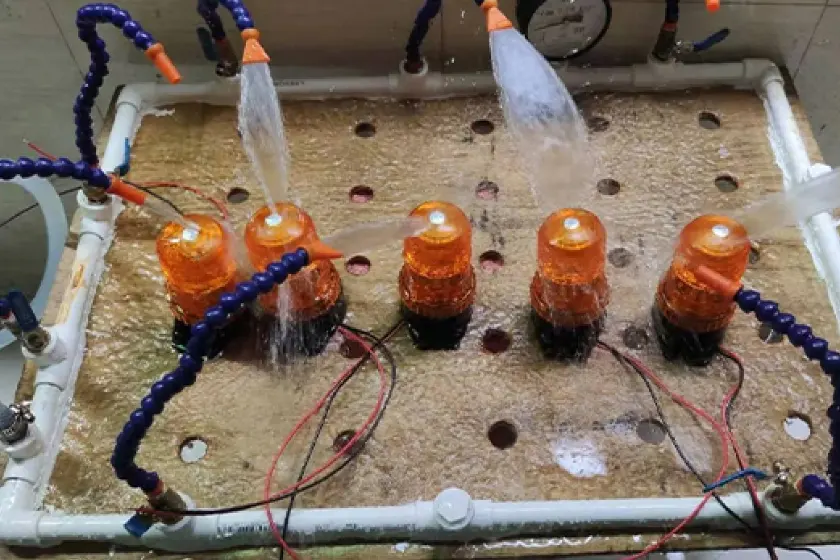
Five lines matter and most of them are not the wattage. Measured lumens with the test conditions stated (ambient temperature, drive current, junction state) — not package-theoretical numbers. Beam angle and candela or the photometric file, matched to the mounting height you’ll actually use. Current draw across the voltage range (ए 12 V lamp on a 24 V system and vice versa behaves differently than the label suggests). Maximum ambient rating with the output figure that survives it. And the operating temperature story for the driver — electrolytic capacitor life roughly halves per 10 °C of continuous heat, which is why a driver mounted on the far side of the heatsink from the LEDs is a design decision you can ask about, and why the sealing and thermal test steps in a factory’s QC line end up mattering more than any single spec-sheet number.
Match the wattage ladder to your machine and site fleet, then check how each band is documented per model — measured output, beam options, voltage variants and thermal ratings — on the XRLL LED work light range; the wider sourcing questions around fixture-level verification are covered in the industrial work light sourcing guide, and battery-powered equivalents are compared watt-hour by watt-hour in the rechargeable work light battery guide.
Send the Task, Get the Wattage Plan
Give the XRLL sales desk your mounting heights, available voltage, area dimensions and lux target — and receive a wattage-and-optics plan per application with measured photometrics, current-draw tables and beam options, from a Foshan factory producing 10,000+ units a day across four lines with optics, electronics and thermal design in-house, answering in 24 घंटे. Custom wattage steps, beam patterns and voltage configurations run on in-house tooling with samples before series production.
ईमेल: service02@xrlledlight.com · Phone/WhatsApp: +86-15818025687
FAQ
How many watts do I need to light a truck bed or machine deck?
A single well-aimed 30–50 W fixture with a wide flood or combo beam covers a standard truck bed or excavator deck at working lux levels; two 30 W units at opposite corners beat one 60 W unit for uniformity and shadow control. The check that settles it is not watts but geometry — mounting height, beam angle and the area’s target lux — because a 50 W spot aimed across the deck underlights the corner closest to the lamp.
Is a higher-wattage LED work light always brighter?
No — watts measure electricity consumed, not light produced. Fixture efficacy varies by driver quality, optics and thermal design across roughly a 2:1 range, so a 40 W engineered lamp can out-emit a 60 W bargain unit, and beyond the thermal design point, extra watts mostly become heat and faster lumen depreciation. Compare measured fixture lumens with stated test conditions, then confirm the delivered light with the photometric file at your mounting geometry.
Can I replace a 55 W halogen work light with a 55 W LED one?
Electrically it is usually the easy direction — an LED drawing the same or lower watts loads the circuit less, though you should verify inrush behavior on long cable runs and check whether the existing circuit expects a load the LED no longer provides (some switched systems need a dummy load for indicators). The physical swap is where care belongs: halogen housings tolerate heat at the mount that LED drivers do not, and the beam shape differs completely — the LED’s light needs its own optics choice, not the old reflector.
What wattage replaces a 400 W metal-halide site tower?
Roughly one quarter of the power in good LED engineering: 100–150 W of fixture-level LED output replaces a 400 W metal-halide tower for most site work, which is the entire economic case for the retrofit — generator fuel, cable copper and runtime all shrink together. Verify the swap with a lux layout at the actual mast height rather than trusting the wattage ratio, and check color temperature and glare ratings, since LED towers are frequently criticized for exactly the two things metal-halide was bad at hiding.


