
Rechargeable LED Work Lights: Battery Specs Buyers Should Compare
Every buyer has met the same rechargeable work light failure: a unit that measured fine on day one goes dark two hours into a winter shift by month eight. Nobody stole a lumen — a battery lost capacity, and the datasheet never described how. Comparing two led work light rechargeable models on “runtime: 10 h” is comparing marketing fiction, because runtime is a triple product of pack energy, driver efficiency and output step, each drifting differently with age and temperature. Facility maintenance teams and equipment-rental buyers who want cordless lighting that survives a three-year service plan need to read battery specifications the way power-tool buyers do. This guide decodes every line that matters — watt-hours, chemistry, cycle life, protection electronics, cold behavior, charging logistics and shipping paperwork — and turns them into a comparison table you can hand a supplier.
Key Takeaways
- Compare energy in watt-hours, not “hours of runtime”: volts × amp-hours is arithmetic you can check; a runtime claim without an output level attached is advertising.
- Chemistry decides the cost curve: modern lithium-ion gives the best energy per kilogram, LiFePO4 trades weight for cycle life and thermal tolerance, and nickel-metal-hydride only survives in legacy stock.
- Cycle life is quoted at a depth of discharge and a temperature — get both, or the “2,000 cycles” number means nothing across a fleet.
- The battery management system is the product: over-discharge cutoff, cell balancing and a stated low-temperature charge limit separate pro packs from consumer cells in a nice housing.
- For importers, lithium freight documentation (UN 38.3 test summary plus the packing instruction used) is as much a deliverable as the lamp’s electrical certifications.
The Only Honest Comparison: Watt-Hours Into Lux-Hours
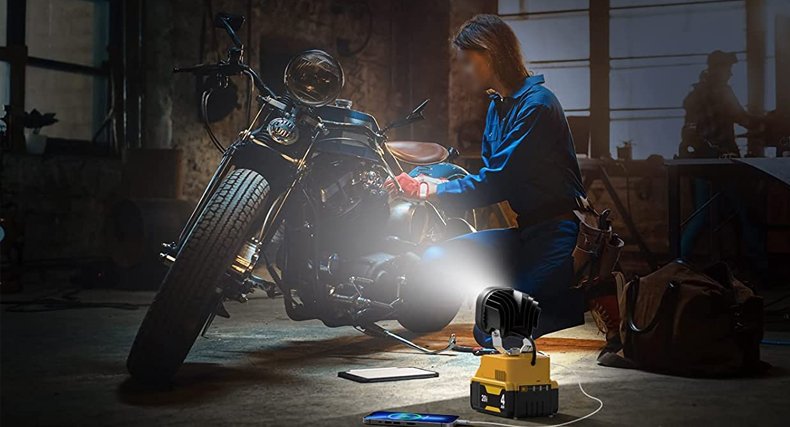
A pack’s capacity in amp-hours means little without its voltage; energy is the product, so multiply them. 에이 “67 Ah” cell block at 3.7 V nominal stores about 248 Wh — and a lamp drawing 25 W of wall power at full brightness has, before inefficiency and fade, roughly ten hours in it. Now the honest version of that sentence: usable hours equal pack watt-hours divided by measured system watt-draw at the output step crews actually run, times a driver efficiency factor, minus thermal and age derating. Every trustworthy runtime table on a datasheet is built this way, per lumen step, at a stated temperature.
Ask for the triad: full-output hours, eco-output hours, and rated draw at the wall while charging. Three numbers, and you can reverse-engineer any manufacturer’s runtime claim — including your current supplier’s.
Cell Chemistry: Three Ways to Buy the Same Lamp
Lithium-ion (NMC-type cells). The volume market: highest energy density, no memory effect, mature charger ecosystem, cell formats borrowed from power tools so replacement packs exist. Plan on a few hundred to a thousand or so full cycles depending on quality and thermal design, and treat cold discharge as the main operational weakness.
Lithium iron phosphate (LiFePO4). Less energy per kilogram for the same money, but cycle life commonly measured in thousands of partial cycles, better thermal stability, and flatter voltage behavior under load. For rental fleets and 24/7 facilities — where the pack is the depreciation line, not the lamp — the weight penalty is usually worth paying.
Nickel-metal-hydride. Only in old stock: low energy density, high self-discharge, memory behavior that punishes sloppy charging discipline. If a current catalogue still ships NiMH, it is clearing a warehouse, not engineering a product.
Ask which cell format the pack uses (cylindrical 18650/21700-type cells, prismatic, or a proprietary molded pack), because format decides whether replacement cells are a global commodity line or a spare number only the original factory stocks.
Cycle Life, Depth of Discharge, and the Warranty Conversation
Manufacturers quote cycle life at a defined depth of discharge (DoD) and temperature — a figure earned at 20% DoD laboratory duty looks nothing like the same cell run flat nightly on a job site. The procurement move is to convert everything into energy delivered over life: a pack that survives 500 deep cycles versus 2,000 shallow ones costs the same per stored watt-hour if you manage charge state, and far more if your crews habitually run lamps to darkness. Which is why the next line matters more than the cycle number.
The BMS Is the Specification Everyone Forgets
A battery management system decides when a pack protects itself, and every failure mode of a cordless lamp lives there:
- Over-discharge cutoff that leaves enough reserve for cells to sit idle safely — a lamp that lets cells run to zero kills its own pack quietly, one deep event at a time.
- Cell balancing during charge, without which a pack’s usable capacity converges on its weakest cell within months.
- Temperature limits on charge as well as discharge. Lithium cells charged below freezing can be plated with lithium and permanently damaged; a pro pack refuses or slows winter charging, and says so in its datasheet. Silence on low-temperature charge limits is the answer.
- Short-circuit and over-current protection rated for the charger’s fast-charge current, not just the lamp’s draw.
- State-of-charge indication legible through a glove and honest at the ends of the range, because fleet charging routines live and die on “is this one full?”.
Cold, Dust and Drops: Where Field Reality Eats Lab Ratings
Lithium capacity is temperature-dependent; expect a visible slice of rated runtime gone on a frosty night shift, and a larger slice if the lamp starts the shift indoors at full charge and sits outside. Chemical aging accelerates with heat, so a pack sealed against a driver that runs hot ages faster than its cycle counter suggests. Then the mechanical story: the pack’s seals share the lamp’s ingress rating, its connectors see the same vibration, and a dropped lamp is a dropped pack. This is where factory test discipline shows up in return rates — sealing tests, aging tests at temperature extremes, and vibration shots are standard stations in a serious manufacturer’s nine-stage inspection chain, and a supplier doing its own IP68 sealing test per unit can tell you what pressure and duration they use.
Charging Architecture and Fleet Logistics
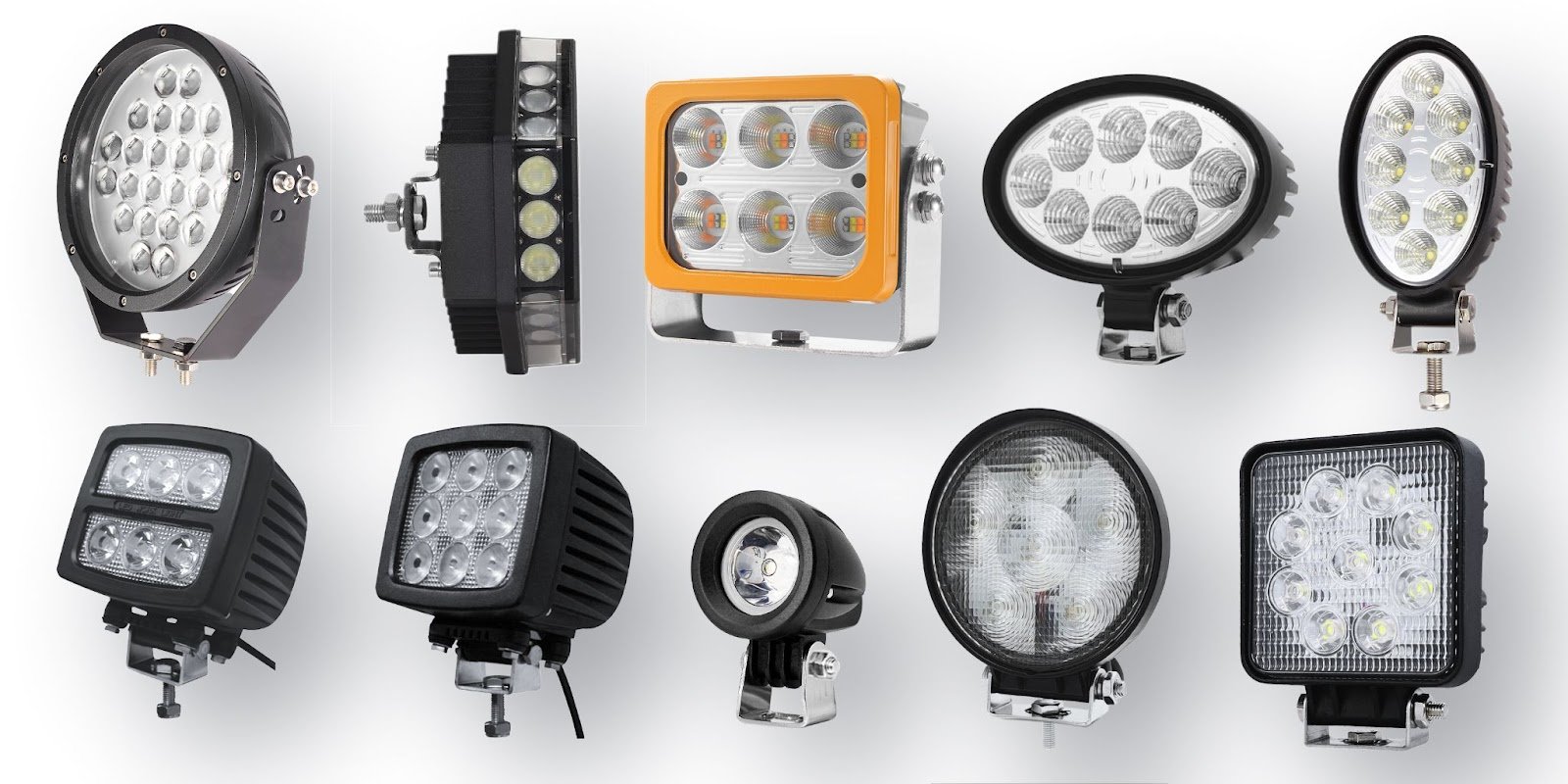
Charging turns a product spec into a process spec. The decision lines: charge time at the supplied charger (wall-outlet current on a night-shift turnaround window, not a fast-charge headline at 30 °C in a lab); charger commonality across the fleet — one brick for every model or a drawer of near-misses; in-cab or in-truck charging options for mobile crews; pass-through use (does the lamp run and charge simultaneously without cooking the pack); and pack replaceability, which converts battery end-of-life from lamp replacement into a consumable line item. Rental buyers should run the reverse question: what does the returned-unit inspection catch — swollen cells, corroded contacts, charger abuse — and is there a part number for every wear item short of the housing?
Shipping and Compliance: The Lithium Paper Trail
Lithium-ion lamps are regulated freight in every major market. The documentation an importer should expect from the factory, per cell/pack type: the UN 38.3 test summary (the transport qualification every lithium battery needs by air and, in practice, by sea and road too), the packing instruction the shipment will travel under (equipment packed with batteries versus batteries installed), state-of-charge limits on the pallet, and destination-market electrical certifications for the lamp and charger together — CE and RoHS documentation in the EU, the applicable listings where claimed in North America. A factory that ships to 80+ countries assembles this as routine; a trader assembles excuses. And note the charger is part of the certification story — a lamp with an uncertified wall brick is a compliance hole no runtime figure fills.
Battery Specs Side by Side: What to Put in the Comparison Sheet
| Spec Line | What Good Looks Like | Red Flag |
|---|---|---|
| Energy (Wh) | Stated as V × Ah with per-step runtime tables | “Up to X hours” with no output level or temperature |
| Chemistry / format | Named chemistry and standard cell format with spare availability | “High-capacity battery” — no chemistry, proprietary molded-only pack |
| Cycle life | Cycles at stated DoD and temperature, plus capacity-retention endpoint | Big number, no conditions |
| BMS protections | Over-discharge, over-current, short, balanced charge, temperature limits both ways | No protection list at all in the manual |
| Temperature behavior | Operating and charge ranges stated separately, with winter runtime derating discussed | “−20 to 60 °C” copied across every spec line of the datasheet |
| Serviceability | Replacement pack and charger part numbers published | Battery sealed equal to lamp life by design |
| Freight documents | UN 38.3 summary + packing instruction + market certifications per SKU | “We’ve shipped it before, it’s fine” |
Buying the Spec, Not the Story
Set the acceptance test by user group. A facility maintenance team needs shift-plus coverage at eco with a charging locker culture: 6–8 usable hours, common chargers, honest state-of-charge readout. A rental fleet needs abuse tolerance: replaceable packs as tracked consumables, published wear-part numbers, and BMS behavior that survives being stored at 0% over winter. A contractor needs the middle path: a lamp heavy enough in watt-hours to cover a known job, light enough to carry up a ladder. Write the requirement as watt-hours, output steps and turnaround time, and half the catalogue disqualifies itself before you ever compare prices.
See how cordless and vehicle-mounted lighting families are documented — energy figures, sealing tests and per-model certification evidence — on the XRLL LED work light range.
Send the Runtime Requirement, Get the Pack Spec
Give the XRLL sales desk your shift length, output level and turnaround window, and receive a watt-hours-matched recommendation with runtime tables per step, BMS documentation and UN 38.3 freight paperwork — from a Foshan factory producing 10,000+ units a day across four lines, answering in 24 시간. Custom capacity, branding and charger configurations run on in-house tooling with samples before series production.
이메일: service02@xrlledlight.com · Phone/WhatsApp: +86-15818025687
FAQ
How many watt-hours does a shift-long rechargeable work light need?
Multiply the system draw at your real working step by the shift length and add a 30% margin for cold and aging: 에이 20 W eco-mode draw over a 10-hour night is 200 Wh minimum, which is why honest mid-range pro lamps sit in the 150–300 Wh band and anything much smaller is a task lamp, not a shift lamp. Demand the per-step runtime table rather than accepting a single “시간” figure.
Is LiFePO4 worth the extra weight for a work light?
If the lamp lives in rental hands or runs nightly in a facility, usually yes — the chemistry’s few-thousand-cycle shallow-duty life and calmer thermal behavior turn the pack from a lamp-sized replacement event into a tracked consumable. If the lamp is carried overhead or moved constantly by one person, the energy-density advantage of standard lithium-ion usually wins and the pack simply becomes a scheduled replacement item.
Why do cold nights kill rechargeable work lights?
Cold raises internal resistance, so available capacity and peak current both collapse — the lamp dims or cuts out while the pack still holds most of its charge, and the “dead” unit recovers indoors, which hides the problem from anyone who isn’t logging temperatures. Specify packs with stated discharge behavior below freezing, charge-lock logic, and if winter runtime matters commercially, run a controlled overnight test of two candidate models before the fleet decision.
What documents should accompany a container of rechargeable work lights?
The UN 38.3 test summary for the cell and pack type, the lithium packing instruction the freight moves under with its state-of-charge declaration, the lamp-and-charger certifications for the destination market (CE/RoHS documentation in the EU, applicable listings where claimed in the US/Canada), and the lamp’s own IP and photometric test reports. Collect them per SKU with report numbers — customs disputes and market-surveillance checks are settled with documents, not assurances.


