Custom LED Work Lights: OEM Options for Equipment Brands
An equipment brand that puts its own name on a work light is not buying a lamp — it is buying a specification it can defend to its own customers, a supply line that survives reorders, and a partner who can hold a tolerance across ten thousand units. That is the real meaning of a led work light oem custom program: the brand keeps the design authority and the market relationship, the factory absorbs the optics, electronics, thermal and tooling complexity behind a housing that carries someone else’s logo. For power-tool brands, vehicle upfitters, machinery OEMs and distributor private-label programs, the difference between a customization arrangement that works and one that quietly fails is almost never the logo — it is whether the buyer knew which decisions to lock down before the first sample. This guide walks the customization ladder from the least to the most committed option, the specification documents a serious factory should hand you, the tooling and sampling gates that protect a reorder, and the questions that separate a real ODM partner from a trading company with a brochure.
Key Takeaways
- Customization is a ladder, not a switch: branding and packaging sit at the light end, beam/optics and voltage variants in the middle, and custom tooling or electronics at the committed end — each rung trades cost and lead time for control over the product.
- The private-label baseline is a brand on a proven housing, not a new design; a factory that already runs the platform across four production lines carries far less reorder risk than one re-engineering it for your order alone.
- Write the specification, not just the logo: measured lumens, диаграмма направленности, drive current, connector type, voltage range and the exact certification scope belong in the purchase agreement before tooling opens.
- Certification is a scope question — E-mark, ТОЧКА, CE and RoHS cover specific models and variants; confirm in writing that your customized version inherits the base model’s certificates rather than assuming it does.
- Samples and the 9-step factory QC line are the two evidence points that predict whether unit ten thousand matches unit one; treat both as gates, not courtesies.
What a led work light oem custom Program Actually Covers
In B2B lighting sourcing the acronym pair gets blurred on purpose by sellers who do only the shallow end. A clean division: OEM (original equipment manufacturing) means you supply or specify the product and the factory builds it, typically to your brand; ODM (original design manufacturing) means the factory owns a platform and you customize it; private label means you take an existing product and put your mark on it. All three live under one led work light oem custom arrangement in practice, and a competent Foshan manufacturer runs all three from the same lines. What matters commercially is where on that ladder your program sits, because the further toward custom design you move, the more the factory’s engineering depth — not its price sheet — decides your outcome. A factory with in-house tooling, SMT electronics assembly and optical design under one 17,000 m² roof is offering something structurally different from an assembler buying housings and LED boards from separate vendors and stitching them together.
The Customization Ladder, Rung by Rung
Read this from the top down; each rung adds cost, lead time and commitment, and each buys you a specific kind of control.
Branding and packaging. Logo silk-screen or laser-etch on the housing, a branded label, custom color-box and printed insert. Fastest and cheapest, usually folded into an existing SKU’s production run. The one thing to verify: whether the mark survives salt-spray and washdown cycles on your target housing, which is a materials question, not a graphics one.
Beam, optics and color temperature. Choose flood, spot or combo optics and a color-temperature point (a 5000–6500 K work spectrum versus a warmer output) on a proven LED package from the OSRAM/Cree classes the factory already qualifies. This is the highest-leverage rung for upfitters whose end users complain about glare or throw distance — the light lands differently on the task without any new tooling.
Electrical configuration. 12 V, 24 V or dual-voltage input, connector type (Bosch-style DT, AMP, bare leads, hardwired), harness length, switched versus unswitched, and the addition of resistors or dummy loads where a vehicle’s existing circuit needs them. The spec-sheet number buyers forget to lock becomes a rework line at the customer’s dock.
Housing, mounting and finish. Bracket geometry, mounting pattern, bezel color, protective guard or lens texture. Often achievable on a base tool with a secondary operation (anodized color, a different bracket casting) rather than a whole new mold.
Custom tooling and full ODM. A new housing mold designed around your industrial style or a specific machine. Maximum differentiation, maximum commitment — tooling cost and a real sample-and-validation cycle sit here, and this is where the factory’s 30-plus patents and in-house design team earn their keep or expose their limits.
Before Tooling Opens: The Specification You Hand the Factory
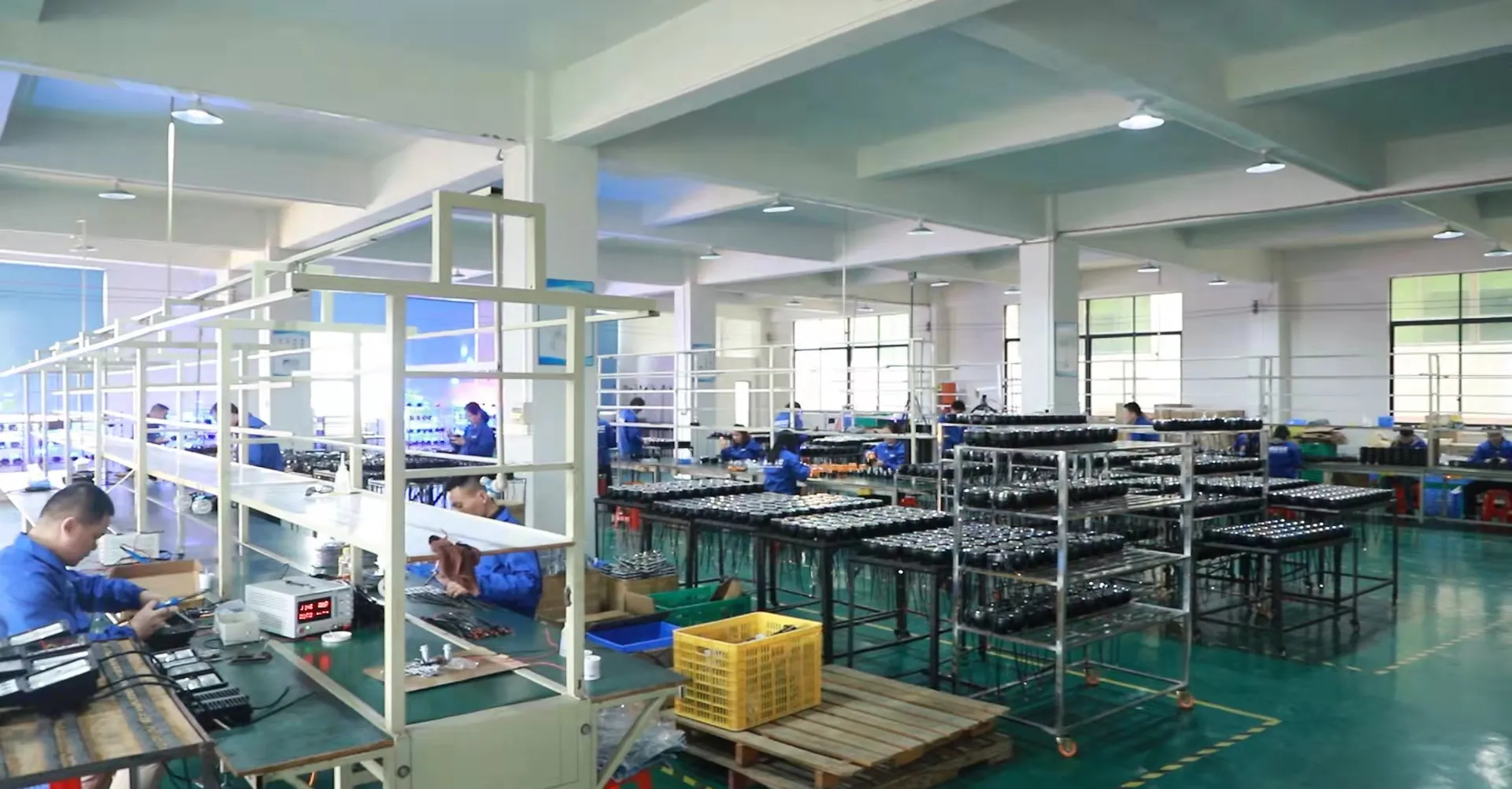
Brands that get burned on a reorder almost always did it at this step — they sent a logo and a target price and let the factory fill the blanks. The document you should receive signed back, model by model: measured fixture lumens with test conditions; the chosen beam pattern with a photometric file; drive current and wattage across the stated voltage range; the LED package brand and bin; connector and harness spec; operating-temperature limits with the output that survives them; ingress and impact ratings (IP class, the vibration and sealing steps); and the exact certification scope. A factory that runs a documented nine-step QC line — including an IP68 water-immersion sealing test on every unit rather than a batch sample — is telling you its process can hold those numbers unit to unit, which is the whole premise of putting your name on its product.
Customization and Certification: A Scope Question, Not an Assumption
Here is the trap that turns a smooth private-label program into a customs or liability problem. Certificates attach to specific models and variants, not to a brand name. A base work light carrying E-mark (Е9), ТОЧКА, CE, МЭК 60825 for the optical output, IP68 and RoHS does not automatically extend those to your customized version if you change the LED package, the driver, the beam optics or the housing material. Get it in writing which certificates your configured model inherits and which need re-testing — and, where a market requires the certificate to name the importer or brand, whose entity is on it. The verification discipline is the same one that applies to any safety-relevant lighting claim, and it is far cheaper to resolve on paper before tooling than after a container arrives. The broader “how do I check a supplier’s paperwork is real” workflow is covered in the ECE R65 certificate verification guide, and electromagnetic compatibility for vehicle-mounted units — a specification increasingly written into OEM contracts — is unpacked in the CISPR 25 EMC explainer.
Samples, Tooling and the Reorders That Follow
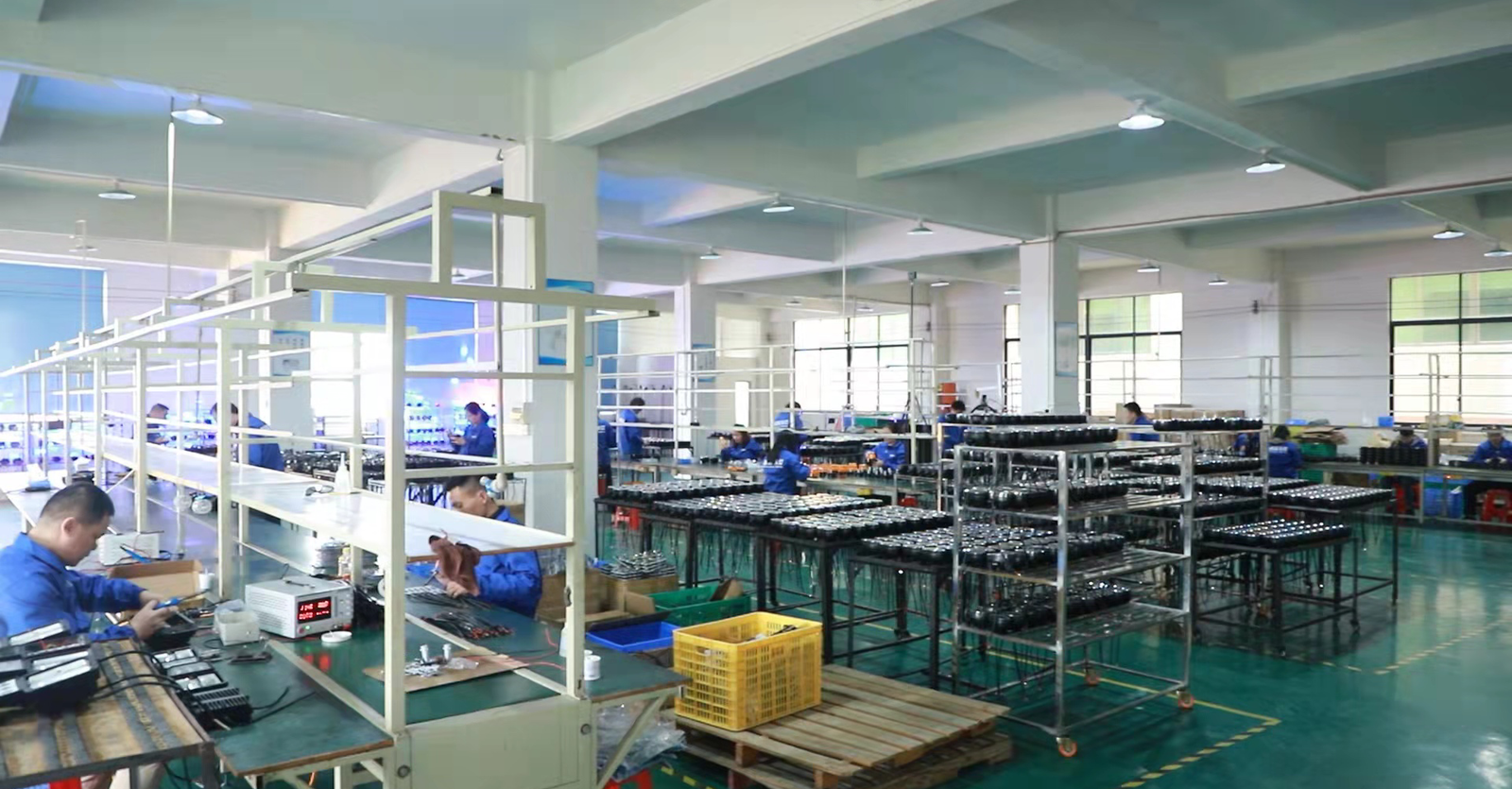
Treat the sample stage as three gates, not one. The first sample proves the concept; a pre-production sample pulled off the actual line — same tooling, same bin of LED packages, same driver batch — proves the process; a retained golden sample signed by both sides becomes the reference every reorder is measured against. Ask, in writing, how the factory controls bin sorting and component substitution across runs, because the quiet way a private-label product drifts is a supplier swapping an “equivalent” LED or capacitor to hold a price. Capacity facts are your leverage and your risk at once: a plant producing 10,000-plus units a day across four lines can absorb a large reorder and protect your lead time, but the same schedule means your customized SKU competes for changeover slots — so confirm the changeover and reorder cadence before you commit a launch date to your own customers. Minimum order quantities, tooling amortization and warranty terms for a custom program are commercial specifics that vary by configuration; get the numbers that apply to your model in writing rather than carrying assumptions forward.
How to Tell a Real ODM Partner From a Broker
| Signal | Real ODM Manufacturer | Trading Broker |
|---|---|---|
| Answers on optics/thermal | Engineer speaks to beam, drive current, derating | Routes questions “back to the factory” |
| Documentation | Per-model photometrics, QC records, cert scope | Catalog PDF, generic cert images |
| Sample control | Golden sample, bin/component substitution policy | Sends a “market sample,” no reference hold |
| Tooling | In-house mold/toll-tooled, owns design files | Outsources; no design authority |
The shortcut: hand a would-be partner one genuinely hard customization request — a specific beam pattern at a stated mounting height, on a given voltage, inside a size envelope — and judge the quality of the questions that come back. A real ODM partner interrogates the geometry and the electrical constraints; a broker asks about order volume.
Matching the Program to a Manufacturer That Runs the Whole Stack
The brands that get the most out of a led work light oem custom arrangement are the ones that pick a partner whose default product already meets their quality bar, so customization is refinement rather than rescue. That is the case for approaching an established Foshan manufacturer operating since 2011 with in-house optics, SMT electronics and thermal design, ИСО 9001 quality management, and a documented nine-step inspection line feeding 10,000-plus daily units — the same platform behind the XRLL LED work light range, and the reasoning behind a structured supplier evaluation in the industrial work light sourcing guide. Explore the brand’s own customization pathway on the OEM/ODM page.
Start the Custom Program on a Proven Platform
Send the XRLL sales desk your target brand treatment, beam and voltage requirements, mounting envelope and the certification scope your market needs — and receive a customization plan mapped to the rung of the ladder that fits, with measured photometrics, sample and golden-sample steps, and a written statement of which certificates your configured model carries, from a Foshan factory running four lines and its own tooling in-house, answering in 24 часы.
Электронная почта: service02@xrlledlight.com · Phone/WhatsApp: +86-15818025687
FAQ
What is the difference between OEM, ODM and private label for work lights?
Private label puts your brand on an existing product; OEM builds to a specification you define, often using the factory’s proven platform; ODM leans on the factory’s own design capability to create or substantially modify the product, including tooling. In a single led work light oem custom program a capable manufacturer can serve all three, and the right choice depends on whether you need a logo, a configuration, or a genuinely different fixture.
Does my customized work light keep the base model’s certifications?
Only within the certified variant scope — never assume it carries over automatically. Certificates such as E-mark, ТОЧКА, CE and RoHS attach to specific models and configurations; changing the LED package, driver, optics or housing material can move your version outside the tested range. Get a written statement of which certificates apply to your exact configuration and whether any re-testing is needed before committing to tooling.
How do I stop a private-label product from drifting between reorders?
Control the components and keep a reference. Specify the LED package brand and bin, the driver and connector part numbers in the purchase agreement, ask the factory to document its substitution policy, and retain a signed golden sample that every reorder is checked against. A manufacturer running a nine-step line with per-unit sealing tests has the process discipline to hold spec; a shop that only samples batches is where drift quietly begins.
What should I confirm before agreeing to custom tooling?
Four things in writing: who owns the mold and design files after you pay for them, the sample and pre-production validation steps before series runs, the tooling-amortization and minimum-order economics for your specific model, and the changeover and reorder cadence on a factory running multiple product lines. Those terms are commercial specifics that vary by configuration, so pin them to your project rather than inheriting general assumptions about lead time or MOQ.


