
OSRAM vs Cree LED Chips: What Truck Light Buyers Should Know
Open any five truck light catalogues and at least three will name-drop the LED chips inside — usually OSRAM, often Cree, sometimes both in the same sentence. Type “OSRAM Cree LED chip truck light” into a supplier forum and you will find buyers treating those two names as a quality shortcut. That instinct is not wrong, but it is incomplete. A chip brand tells you which die a fixture started with, not how it will perform after one winter of highway vibration and nightly wash-bay soakings. This guide explains what the OSRAM and Cree names actually certify, where chip sourcing evidence gets thin, and which engineering factors decide whether a truck light earns its price — written for distributors and brand owners comparing suppliers, not for drivers.
Key Takeaways
- OSRAM (Germany, now ams OSRAM) and Cree (US) are the two name-brand LED die suppliers quoted most often in heavy-duty vehicle lighting; both ship automotive-graded components with published bin data, which is why spec sheets lean on their names.
- The chip name alone proves nothing useful. What a buyer should request is the specific chip series or part number, the batch traceability, and the supplier’s incoming-chip inspection practice — “premium brand chips” without a reference is marketing copy.
- Lumen maintenance, colour consistency and failure rate in the field are set as much by thermal design, driver quality and sealing as by the die. A well-binned chip in a hot, wet housing still degrades early.
- Counterfeit and down-binned components are a real problem in aftermarket lighting; ask how the factory verifies chips on receipt, and whether it can show the records.
- For OEM/ODM programmes, fixing a specific chip series in the specification is worth more than any brand claim on the datasheet — it locks in bin consistency across reorders and protects your warranty costs.
Why the Chip Brand Earns Space on the Datasheet
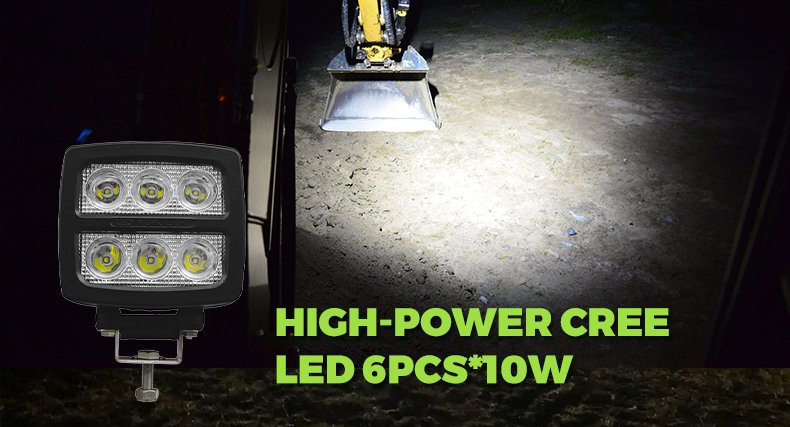
An LED chip (the semiconductor die that produces the light, often called a lamp bead once it is mounted on its small carrier) is the part of a truck light with the least visible engineering behind it and the most consequence flowing from it. Two properties drive buyer attention. First, binning: when a wafer is cut, individual dies are sorted into bins by colour temperature, forward voltage and luminous flux. Name-brand suppliers run tight, published bin structures, so a fixture built from a single bin across a production batch looks uniform on the bench and after two years on the road. Second, thermal resistance: how efficiently the die dumps its heat into the board and housing decides how fast it dims over its working life. Established suppliers publish the data that lets a lighting engineer model both.
OSRAM’s heritage is European automotive lighting — decades of supply into vehicle manufacturers, which is why its name carries weight with buyers selling into German and UK fleets. Cree built its reputation in the US market on high-power packages and on silicon-carbide substrate technology, which historically gave its dies strong thermal characteristics. Neither story means a fixture is automatically good; both mean the starting material is traceable and documented, which is the actual point for a purchasing decision.
OSRAM vs Cree: What Actually Differs for a Buyer
For procurement purposes the two are closer than the forum arguments suggest. Both are genuine name brands; both are counterfeited; both appear in truck lights at wildly different price points because the chip is only one bill-of-materials line. The meaningful differences show up in which series a factory uses, whether it buys through authorised distribution, and whether it can tie a delivered batch back to a chip lot. The comparison table below organises what to ask rather than which brand “wins.”
| Decision dimension | What OSRAM naming implies | What Cree naming implies | The question to put to the supplier |
|---|---|---|---|
| Chip identity | German-origin dies, strong automotive-channel history (ams OSRAM) | US-origin dies, high-power packages with a long off-road/vehicle track record | Which series or part number is used — and is it written on the specification sheet, not just the marketing page? |
| Binning discipline | Published bin tables; colour consistency achievable across batches | Published bin tables; multiple flux and voltage bins per package | Are fixtures assembled from a single bin per order, and will the supplier state the bin code on shipping documents? |
| Supply-channel risk | Heavily counterfeited because the name sells lamps | Also counterfeited; recycled and down-binned stock circulates in aftermarket channels | Where are chips purchased — authorised distributor or open market? Can the factory show incoming-inspection records for the lot? |
| Thermal behaviour | Package-level thermal resistance documented for engineering modelling | SiC-substrate heritage gives good heat spread from the die | What junction temperature does the design run at, and what lumen-maintenance evidence exists at that temperature? |
| Buyer leverage | Name recognition helps EU resellers | Name recognition helps North American resellers | Does the OEM/ODM agreement lock the chip series so a later substitution requires written approval? |
What the Chip Does Not Tell You
Placing an order on chip names alone is how buyers get surprised twice. The die sets potential; the fixture decides what survives contact with a truck. Three elements outrank the brand marking on the bead.
Thermal design
A chip rated to run cool will still degrade fast if the aluminium housing, board stack-up or potting compound can’t move its heat away. The decay curve a fleet eventually feels is a junction-temperature curve, and it belongs to the whole assembly. Our breakdown of heat dissipation and thermal design in LED work lights covers the mechanism in detail — the same physics govern a truck-mounted lamp that runs six hours a night through an Idaho winter.
Driver electronics
The constant-current driver is usually the first component to die in a truck light, long before the chips dim meaningfully. Trucks are electrically hostile: load dump when a battery recharges after a cold start, transients from alternators, 12 V systems that spend all day at 13.8–14.4 V, and 24 V systems with their own noise. Wide-voltage designs that tolerate a broad input band are a practical answer for mixed fleets; ask for the driver’s operating voltage range and protection features, not just the chip brand.
Sealing and corrosion control
High-pressure wash bays, road salt and overnight condensation attack the interface where light meets air. An IP-rated seal that is tested on the finished fixture — not assumed from the gasket drawing — is what keeps a name-brand chip dry for its working life.
Red Flags in Chip Claims — and What Good Evidence Looks Like
Treat these as documented warning signs when comparing suppliers of truck lighting:
- Brand name with no reference. “Original OSRAM chips” or “famous-brand lamp beads” without a series or part number is unverifiable — and “famous brand” is how down-binned stock gets described.
- No incoming inspection. A factory that never checks chips on receipt cannot tell you anything about the lot it built your order from. Ask what inspection happens and what the records look like.
- Substitution without notice. Suppliers who quietly swap chip series between reorders break your bin consistency and your warranty assumptions. The fix is contractual: the specification names the series, and a change needs written approval.
- Prices far below the honest band. Counterfeit LED dies look identical on a lens and fail like scrap metal in the field. If a quote undercuts the market while claiming the same chips, the chips are where the money was saved.
Good evidence, by contrast, is boring and specific: a chip series stated on the product specification, an incoming-inspection step that verifies beads before assembly, and a factory that can walk you through where each was done. XRLL’s quality chain starts with LED chip inspection on receipt — OSRAM and Cree verification is step one of a nine-step process that runs through PCB and driver checks, sealing, photometric testing, temperature aging, vibration and shock, and a pre-shipment audit. The company adopted German OSRAM and US Cree chips as standard components back in 2013 and has run the specification that way since; the full nine-step flow is described on the manufacturing pages of this site.
How to Specify Chips as a Distributor or Brand Owner
For resellers, the chip argument is a sales tool with limits: end customers care about warranty returns, not bead origin. Use the brand name where it opens a conversation, then close it on the three factors that protect your margin — thermal headroom in the housing, driver protection against the truck electrical environment, and sealing validated on finished units. For fleet-facing distributors, ask suppliers to state bin codes per order and keep them constant across reorders; a product line that shifts colour temperature batch to batch costs you trust with every truck that gets a replacement lamp.
For OEM and ODM programmes the approach is tighter still. Fix the chip series in your agreement, require lot traceability, and book a right-to-audit on incoming inspection. A manufacturer operating vertical integration — its own tooling, its own assembly lines, its own test bench — can hold that specification reorder after reorder; a trader assembling from whatever components are cheapest this month cannot, which is why the same “OSRAM” claim appears on lamps with two-year and ten-year field experiences. For buyers comparing the truck lighting line itself, the selection guide to light bars for fleet buyers works through the fixture-level choices that sit on top of the chip decision.
Before You Order: A Six-Point Chip-Verification List
- Part number on paper. The specification names the chip series, not just the brand.
- One bin per order. Colour and output bins are fixed and stated on shipping documents.
- Traceable channel. The factory states whether chips come from authorised distribution and can show lot records.
- Incoming inspection evidence. A documented chip check exists before assembly — request a sample record.
- Thermal context. The datasheet gives an operating temperature range for the fixture, not just the die.
- Change control. Any later substitution requires written approval from you.
Work that list into your next supplier comparison and the OSRAM-versus-Cree debate settles into what it should be: one line of a specification you can verify, instead of a slogan you have to trust.
Get the chip specification in writing before you commit
Tell us which truck lighting SKUs you are comparing and what your market expects. XRLL states the chip series on the specification, locks bins per order, and supports OEM/ODM programmes with incoming-inspection records and change-control agreements — with a quote within 24 hours.
Frequently Asked Questions
Is an OSRAM chip better than a Cree chip for a truck light?
Not as a general rule. Both are established name-brand die suppliers with published bin data and automotive-channel histories; the field outcome depends more on which series is used, how it is binned into the fixture, and how well the housing and driver are engineered. Two lamps carrying the same brand of chip can perform very differently.
How can I tell if a supplier’s chip claim is genuine?
Ask for the chip series or part number on the specification, the bin code per order, and a sample incoming-inspection record. A genuine claim survives all three questions; a marketing claim collapses at the first one. Be especially sceptical of deep discounts paired with big brand names — counterfeit dies follow the popular names.
Does the chip determine how long a truck light lasts?
Only partly. The chip governs gradual lumen depreciation; the driver, the thermal design and the sealing govern sudden failure, which is what fleets actually experience on trucks. Voltage transients, vibration, heat soak and wash-bay water ingress end more lamp programmes than dimmed dies do.
What should an OEM/ODM agreement say about LED chips?
Name the chip series, fix the bin, require lot traceability and batch-consistent assembly, and add a change-control clause: the manufacturer cannot substitute a different series without your written approval. That converts a brand claim into an enforceable specification you can reorder against.
Why do XRLL fixtures use both OSRAM and Cree chips?
German OSRAM and US Cree have been XRLL’s standard components since 2013, chosen for published bin data and supply stability. Incoming chip verification is the first of the factory’s nine quality-control steps, and the specific series is stated per product specification so buyers can order against it directly.


