LED Light Bars for Tow Trucks: Heavy-Duty Specs and Mounting Options
A tow truck does not park under a bay light and wait. It works shoulders at midnight, backs a disabled semi onto a grade, and winches in rain while a second operator directs from the deck. The single LED light bar for tow trucks is the piece of equipment that decides whether that crew can see the hook, the chain, and the traffic bearing down on them — and it is also the piece that most often fails, because a recovery vehicle subjects its lighting to vibration, water and impact that a normal fleet truck never does. For the procurement buyer equipping a recovery fleet, the specification is not about picking the brightest bar on the shelf; it is about matching beam pattern, sealing, mounting position and electrical tolerance to the two distinct jobs a tow truck performs: lighting the scene and lighting the road.
Key Takeaways
- A recovery vehicle needs two different light fields — a wide flood to work the winch and cargo area, and a forward spot to see down the road on a dark shoulder — and a single beam pattern rarely does both well, which is why combo bars and dual-position mounting dominate tow specifications.
- The failure modes on a tow truck are vibration, water and impact, not the LED emitters: seal integrity (an immersion rating such as IP68), connector quality and mounting strain relief decide field life far more than peak lumens.
- Mounting height trades reach against control: a cab-roof or tower bar throws light far but washes out close work and blinds oncoming traffic if aimed wrong; a bumper or deck-mounted bar lights the immediate scene without glare.
- Auxiliary light bars are not DOT-homologated lamps and must be wired to a driver-controlled switch and aimed so they are not an on-road glare hazard; they are scene and off-road equipment, not a substitute for FMVSS 108 position lamps.
- Standardise on a sealed, wide-input fixture family across the fleet so one replacement part, one connector and one aim routine services every truck in the yard.
Why Recovery Duty Breaks Ordinary Light Bars
An over-the-road truck runs its lighting on paved roads at a steady hum. A tow truck runs its lighting through a worse set of conditions: the low-frequency shudder of a diesel idle with a winch under load, the shock of backing onto uneven shoulders, pressure-washing salt and grime off the deck at the end of shift, and long hours of rain on a housing that was never meant to be wet. Those four stresses — vibration, impact, water ingress and thermal cycling — are what separate a light bar that lasts a season from one that lasts several years, and they are the reason a buyer should read a tow specification as a durability document first and a brightness document second.
Durability here is a manufacturing fact, not a marketing adjective. XRLL’s production line runs each fixture through a nine-stage inspection that includes an immersion seal test, a high-and-low temperature ageing cycle, and a vibration-and-shock test before a unit ships — the same discipline that underpins its IP-rated exterior lamps. A potted, gasketed solid-state bar built on that flow behaves differently in the field than a “weatherproof” bar whose seal was only sample-tested. When you compare candidates, ask the supplier which of those tests every unit passes versus which are sampled; that answer predicts your replacement rate more accurately than the lumen number on the box.
The Two Jobs: Beam Patterns For Scene Work And Road Work
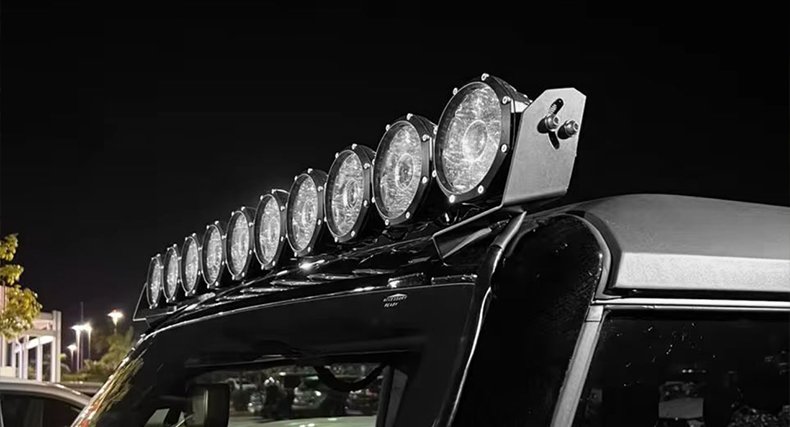
A tow truck asks its lighting to do two things at once, and each needs a different beam. Scene work — hooking a driveline, chocking wheels, directing a spotter at the deck — needs a wide, low, even flood that covers the ground around the vehicle without hot spots or blind shadows. Road work — seeing how far up a dark highway shoulder the lane runs before you commit to a stop — needs a tight, long-throw spot. A single bar rarely serves both well, which is why the practical tow specification splits into the three patterns below.
| Beam Pattern | What It Does Well | Where It Fails | Tow-Truck Use |
|---|---|---|---|
| Flood (wide) | Even ground coverage close to the vehicle; lights the deck, winch and wheels | Short throw — little useful distance down the road | Scene lighting for the recovery operation itself |
| Spot (pencil) | Long-throw distance; reads the road and hazards far ahead | Leaves the immediate ground dark; a narrow hotspot | Approach and roadside visibility on unlit shoulders |
| Combo (spot + flood) | Balances reach and coverage in one housing | Neither extreme is optimal; a compromise on both ends | The default single-bar choice where budget limits you to one fixture |
| Dual-position (two bars) | A dedicated flood for the deck plus a spot or combo up high | Higher cost and more wiring | The serious recovery-fleet specification |
The pattern choice also carries a less obvious consequence: a spot that is well-liked for road reach becomes a hazard at a roadside job site. Forward-facing throw aimed down the highway puts light into the eyes of oncoming drivers doing 60 mph past your stopped wrecker. Scene lighting that points down and back lights your own crew without creating that glare. This is the single most important reason aim and mount position, not just lumen count, decide whether a bar is usable on a live road.
Heavy-Duty Specifications That Matter On A Recovery Vehicle
Once beam pattern is settled, the tow specification should read as a list of survivability ratings and electrical tolerances. The shortlist a fleet buyer writes down:
- Sealing class and method. A bar that will face pressure-washing and standing rainwater needs an immersion-rated seal (IP68 is the honest exterior standard) and a potted driver, not just a gasketed cover. Ask whether the seal is tested on every unit or sampled — the difference shows up as water inside the lens by month six.
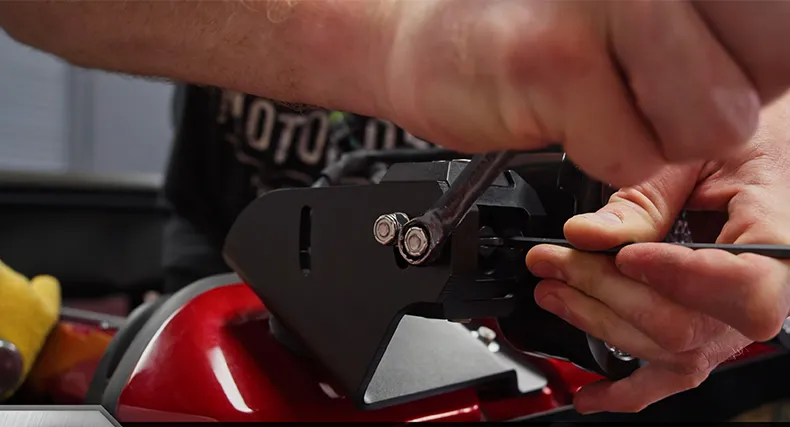
- Impact and vibration resistance. Recovery trucks see shock loads that crack brackets and loosen set-screws. A ruggedised housing, protected optics and a mounting system with strain relief keep the beam aimed; the underlying production stage is the vibration-and-shock test in the QC flow. This is where a heavy-duty bar earns its price premium over a consumer unit.
- Thermal management. A high-output bar bolted to a hot hood or roof runs in a small oven. Driver components rated above the housing’s measured internal temperature, plus high-temperature ageing in production, are what keep the lumen maintenance curve flat over years rather than a fast decline. Proper heat sinking and driver margin are more important than peak watts.
- Electrical input tolerance. Tow trucks mix 12 V and 24 V platforms and their harnesses see cold-crank sag and load-dump spikes. A regulated wide-input driver that runs a true 9–36 V range — the reasoning is covered in our wide-voltage compatibility explainer — lets you carry one part number across the whole fleet instead of tracking variants.
- Harness and connectors. The bar is only as reliable as the circuit feeding it. Sealed connectors, correct gauge, a relay or dedicated switch, and a clean ground are the difference between a bar that works and a bar that flickers. Budget the wiring as part of the light bar decision, not after it.
Mounting Options: Cab Roof, Tower, Bumper And Rear Deck
Mounting is a tow-truck-specific decision in a way it is not for an ordinary fleet vehicle, because a wrecker carries specialised equipment — a boom, a wheel-lift, a winch — that occupies the very roof and rear positions a light bar would otherwise use. The four practical zones, each with a distinct beam consequence:
- Cab roof. Highest forward position, best road reach, keeps the bar clear of the boom. Cost: throw lands far, close ground work stays in shadow, and glare into oncoming traffic is worst here if aim is off. Reserve for the spot or long-reach unit.
- Boom or tower top. On heavy wrecker and rotator units, a deck or tower mount puts light high over the load. Good all-round scene coverage, but subject to the most shock and needs the most rugged mounting and wiring.
- Front bumper or grille. Low, forward, lights the road immediately ahead and the under-vehicle work area without raising the glare angle. Prone to damage and grime; needs sealing and a protective position.
- Rear deck. The recovery-side position: a flood or worklight over the deck, winch and wheels lights the actual work. Often the single most valuable fixture on the truck and the most commonly left off by a generic install.
For the general task of sizing and choosing between bars for a fleet — lengths, wattage tiers and the reach-versus-spread trade-off at the cab level — see our truck light bar selection guide; the tow angle here is that the rear-deck and bumper positions earn their place on a recovery vehicle in a way they do not on a line-haul tractor.
Electrical And Compliance Considerations For On-Road Towing
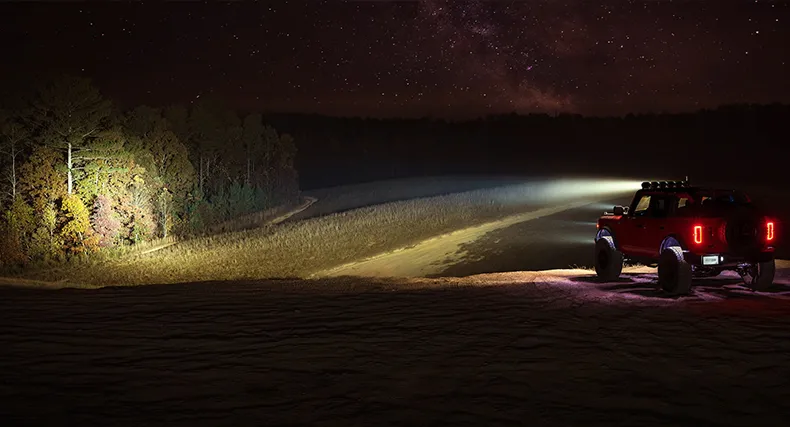
Here is the point that trips up new tow-fleet buyers: an auxiliary LED bar is scene and off-road equipment, not a road-legal position lamp. US on-road lighting is governed by FMVSS 108, which prescribes the colour, position and intensity of headlamps, tail lamps, markers and clearance lamps — and it does not certify aftermarket light bars as substitutes for any of those. The compliant, common-sense approach is to treat the bar as a controlled auxiliary: wire it to a driver-operated switch, use it to light the work and the immediate roadside, and switch it off (or use a spot that stays below the glare line) when oncoming traffic is present. Our companion piece on FMVSS 108 marker and clearance placement covers which lamps actually carry the legal road-visibility role, so the bar and the position lamps are specified as a system, not confused for one another.
On certification paperwork the honest rule is the same one that governs every XRLL product family: the company’s compliance base — ISO9001 quality management, E-mark (Е9) approvals on vehicle-component families, DOT-relevant test documentation, CE and ROHS — is maintained per family, and an importer or fleet buyer should request the report references for the specific fixtures they are buying rather than assume a badge transfers across the catalogue. For a tow fleet that documents each vehicle’s equipment for insurance or customer sites, that per-family paperwork is the file you want before the order, not after an incident.
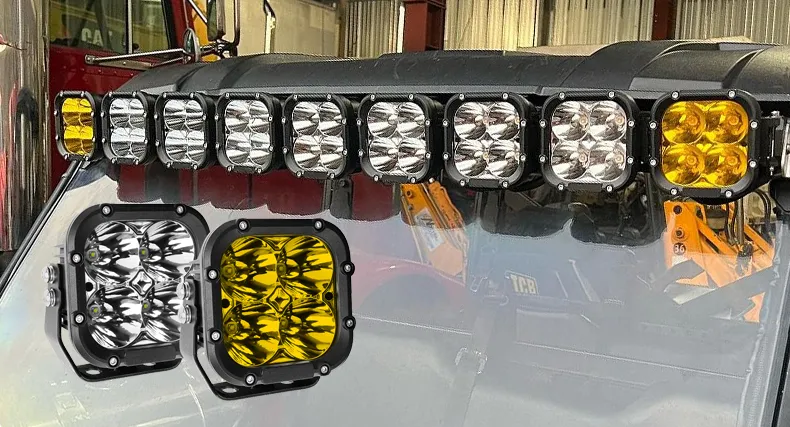
Specify one sealed bar family across the whole recovery fleet
Send your vehicle types, boom or wheel-lift configuration and destination markets. XRLL engineers map a flood-plus-spot or combo plan to a single sealed, wide-voltage fixture family — connector, mounting and colour-temperature standardised across the yard, with OEM/ODM options and a quote within 24 часы.
Frequently Asked Questions
What beam pattern is best for a tow truck light bar?
It depends which job you are lighting. A wide flood covers the deck, winch and wheels for the recovery operation itself; a spot throws light far down an unlit shoulder; a combo balances both in one housing but optimises neither. A serious fleet usually runs a high forward bar (spot or combo) plus a dedicated flood over the rear deck, so the road and the work are lit independently.
Are LED light bars legal to use on the road?
Aftermarket light bars are not FMVSS 108-approved position lamps, so they are treated as auxiliary scene and off-road lighting. Use them to light the work and the immediate roadside, wired to a driver-controlled switch, and manage their angle and use around oncoming traffic so they are not a glare hazard. They supplement the legal headlamps, markers and tail lamps; they do not replace them.
Why do light bars fail on tow trucks more than other trucks?
Because a recovery vehicle hits the four stresses that kill lighting: shock from backing onto uneven ground and winching under load, continuous low-frequency vibration that loosens mounts, pressure-washing and standing water that attack the seal, and heat soak behind the housing. The emitters usually survive; the seal, connector and mounting fail first — which is exactly what the sealing and vibration tests in a heavy-duty QC flow are for.
Where should a light bar be mounted on a wrecker?
Most recovery fleets split it. A cab-roof bar gives the longest forward reach but leaves close work in shadow and is the worst glare source. A boom or tower top lights the load area. A bumper bar lights the ground immediately ahead at a low glare angle. A rear-deck flood lights the winch and wheels, and is the position most often skipped on a generic install. Match height to the job: high for distance, low and rear for the recovery work.
Do tow truck fleets need 12 V or 24 V light bars?
Buy a regulated wide-input fixture that runs a true 9–36 V range rather than a fixed-voltage one. Heavy tow and wreckers commonly run 24 V electrical while lighter units run 12 V, and every vehicle sees cold-crank sag and load-dump spikes. A wide-input driver keeps one part number valid across the whole fleet and rides out the transients that shorten a fixed-voltage driver’s life.
Can importers get documentation for a specific tow light bar model?
Да, and you should. XRLL maintains ISO9001, E-mark (Е9), DOT-relevant test documentation, CE and ROHS per product family; request the report references for the exact fixtures you are ordering, plus the mounting-position and colour prescriptions from that paperwork. A supplier who cannot produce per-family documentation is a liability you discover at an audit or incident, not a saving.


